Engineered Around Your Load & Span
Welded Steel Grating
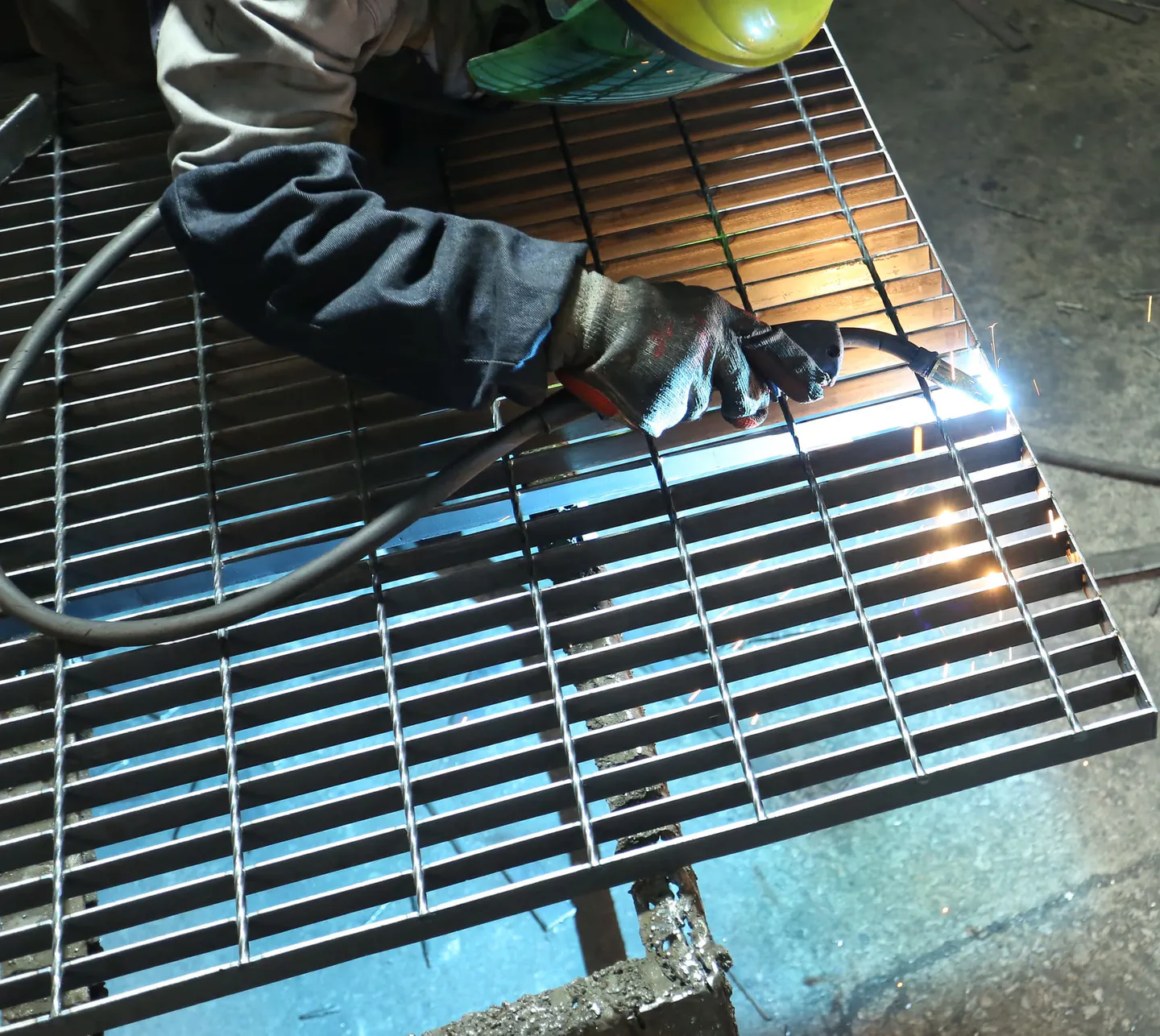
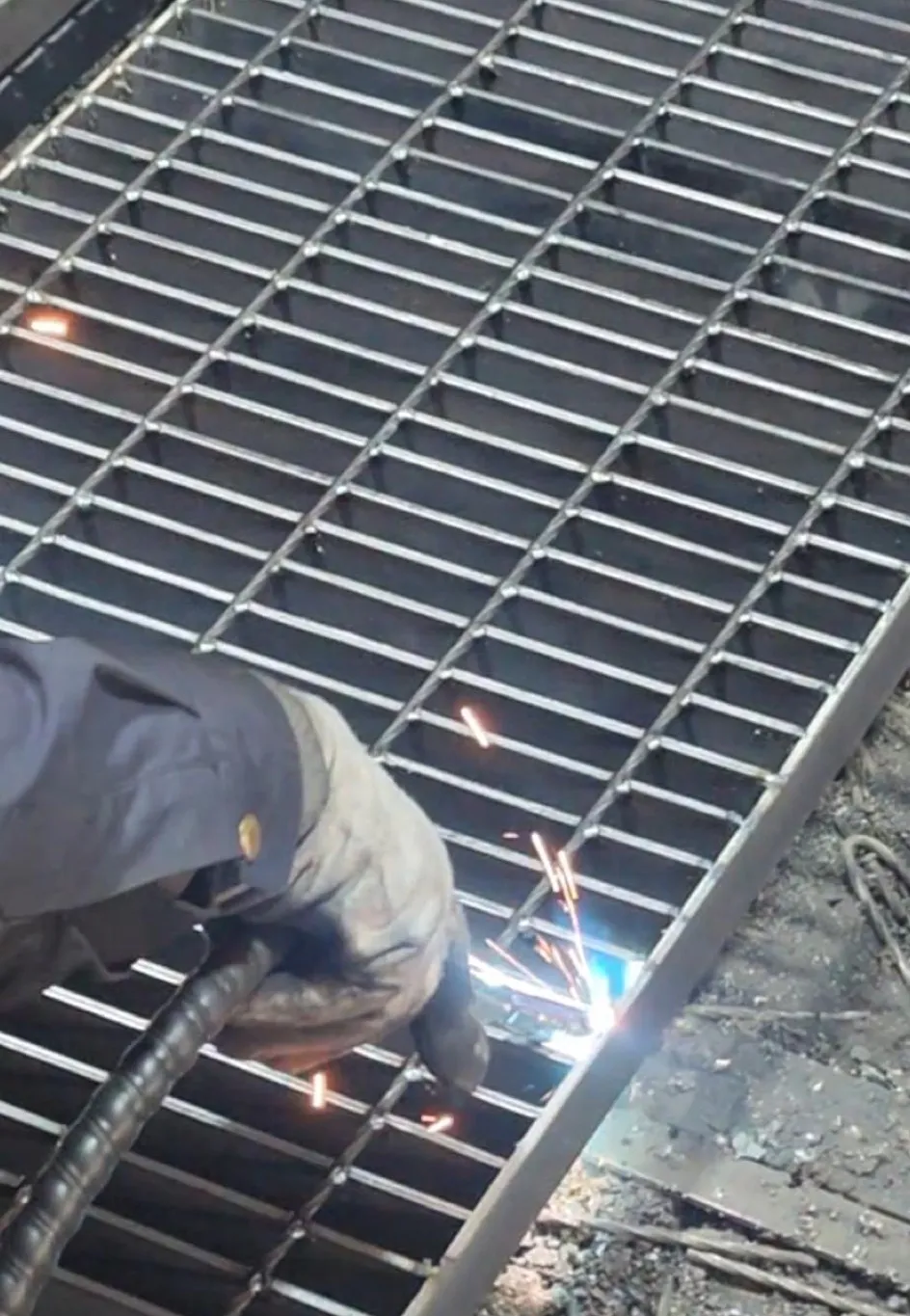
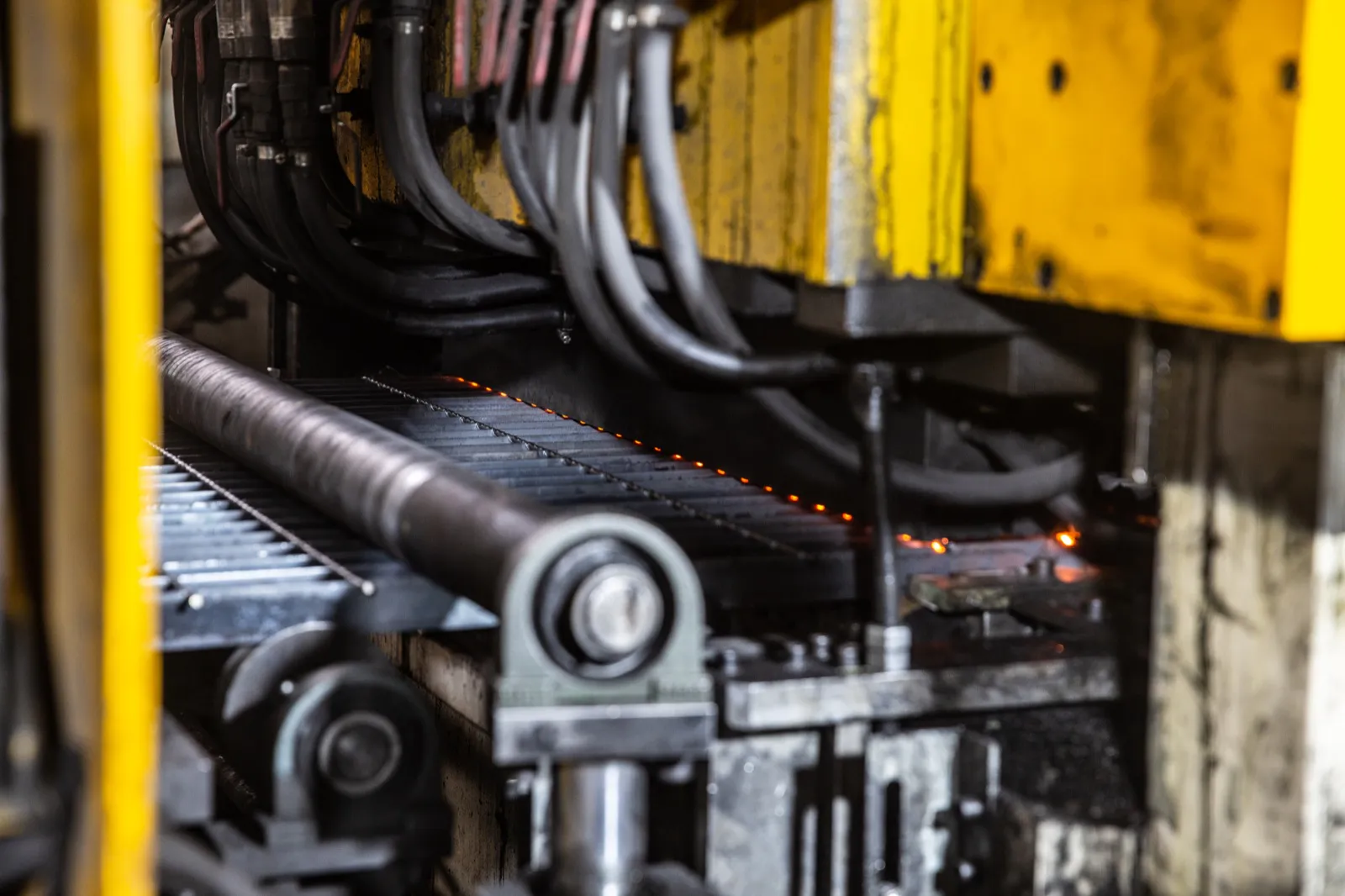
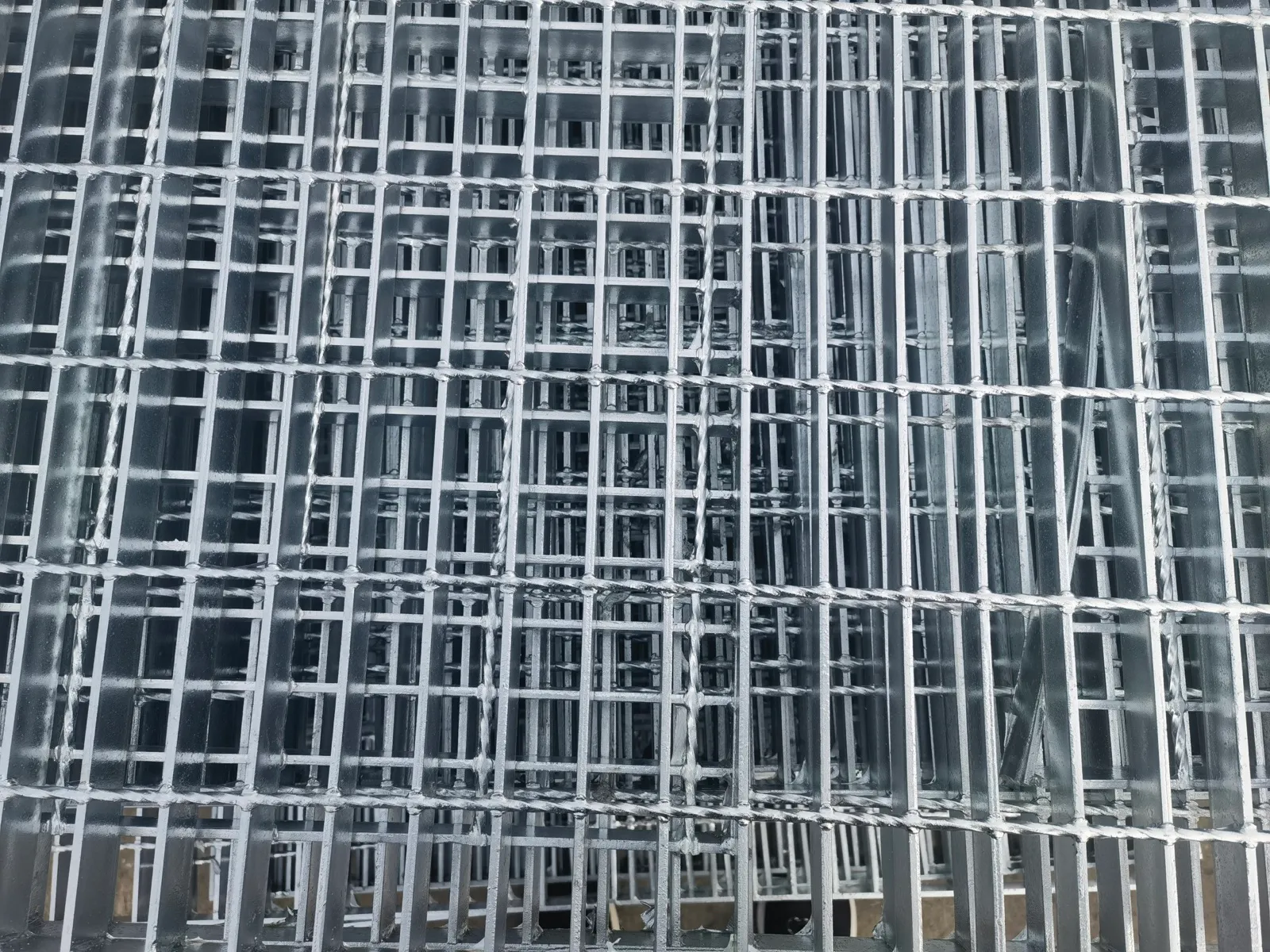
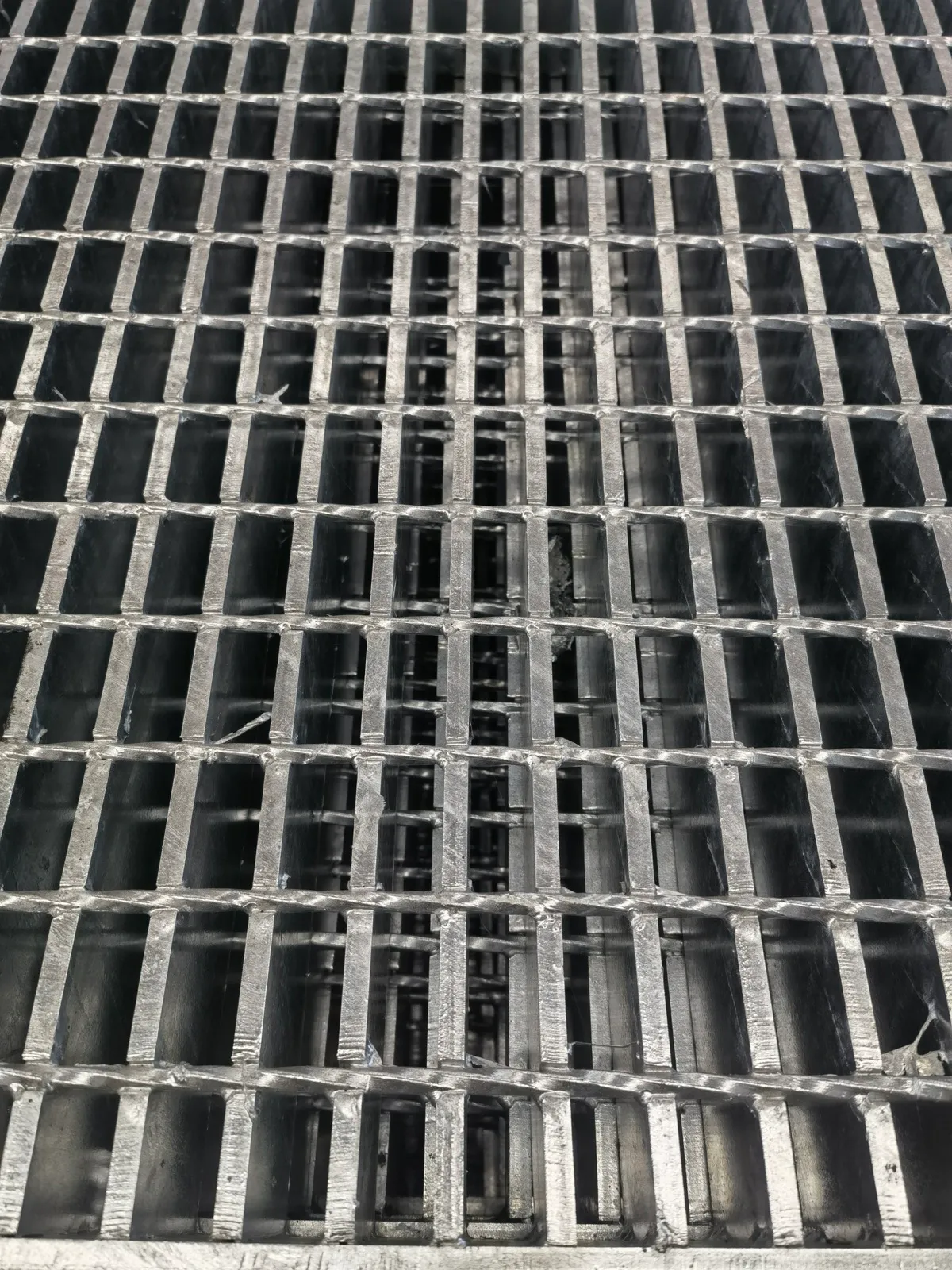
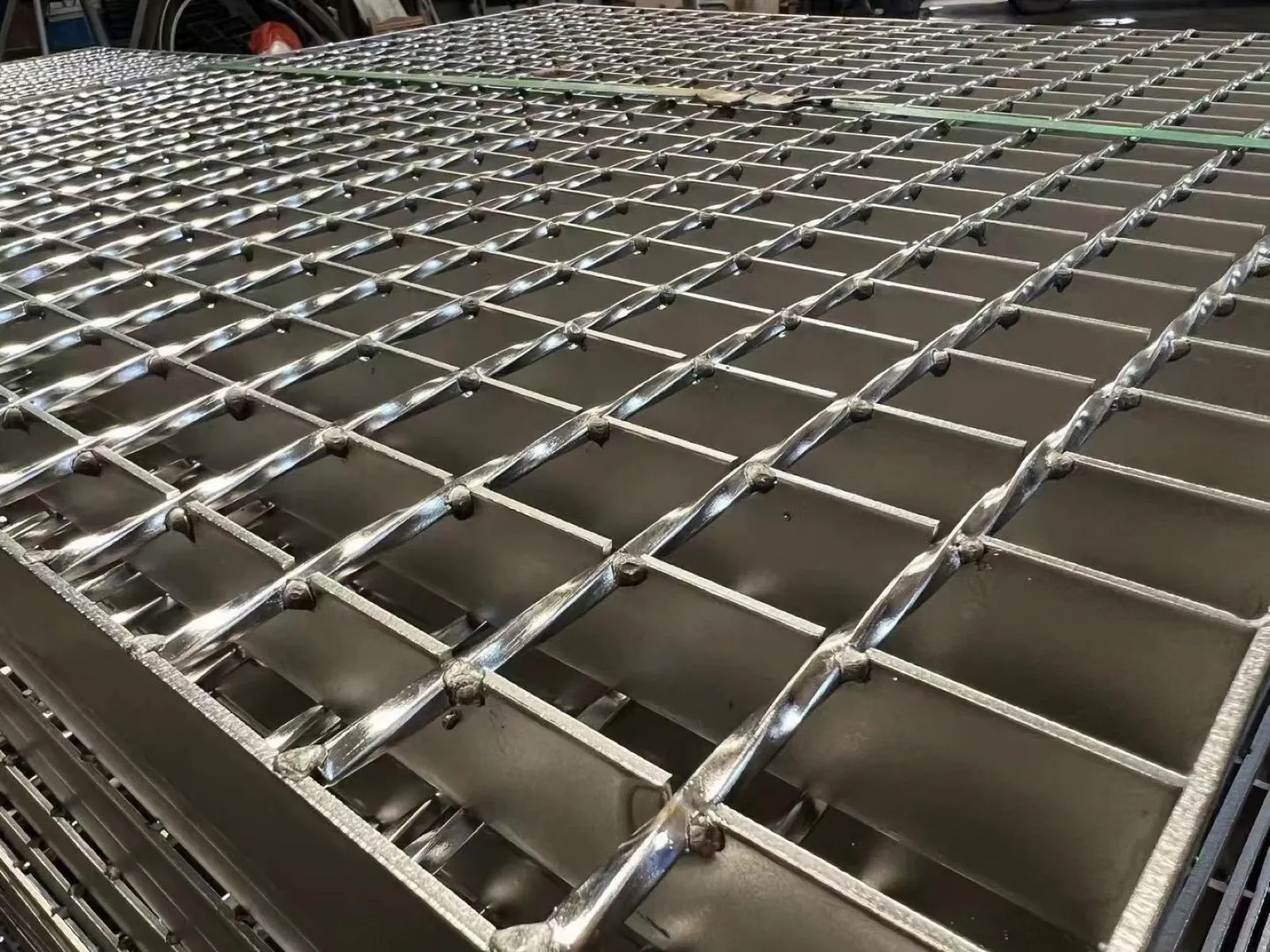
Welded steel grating is made by resistance-welding twisted cross bars to load-bearing flat bars under high pressure, forming a rigid one-piece panel. It is the most common and economical bar grating type, produced on automated press-welding lines for high-volume standard panels and by skilled manual welders for irregular shapes, heavy sections and project-specific fabrication.
- Machine press-welding for high-volume standard panels
- Manual welding for irregular shapes and heavy custom work
- Carbon steel or stainless steel, plain or serrated surface
- Fabricated, banded and numbered to your layout drawings

What is welded steel grating?
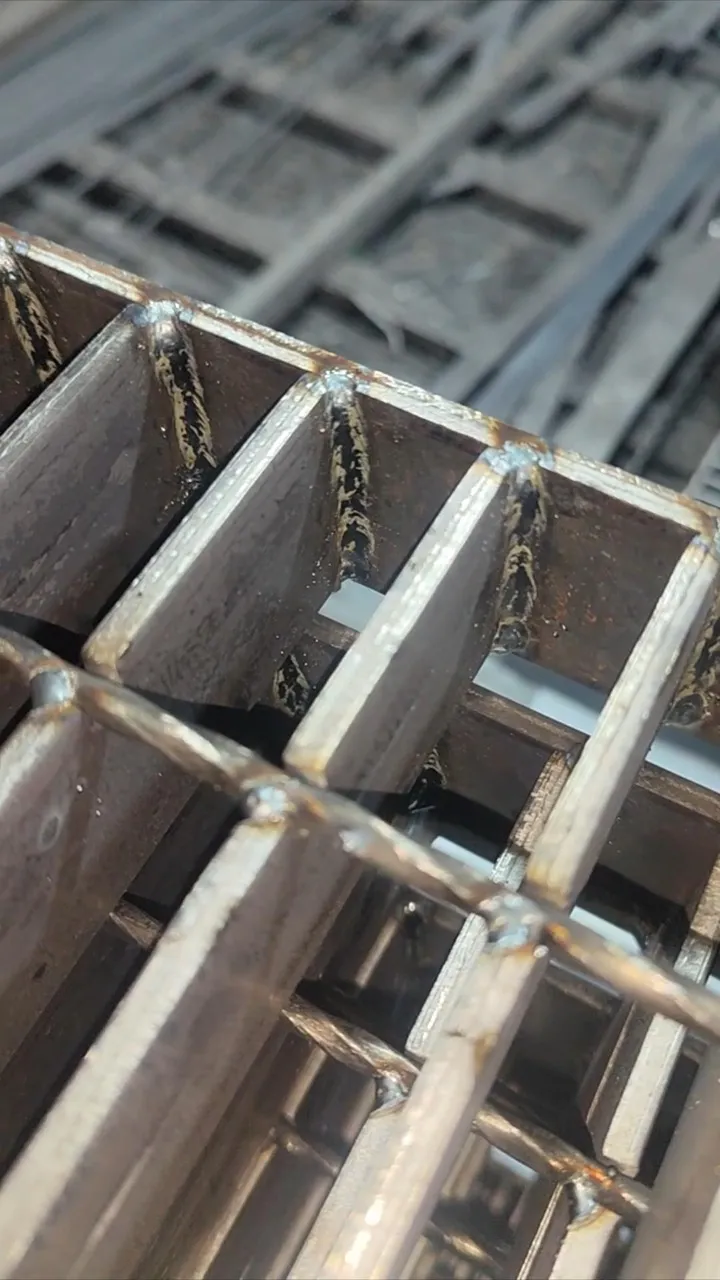
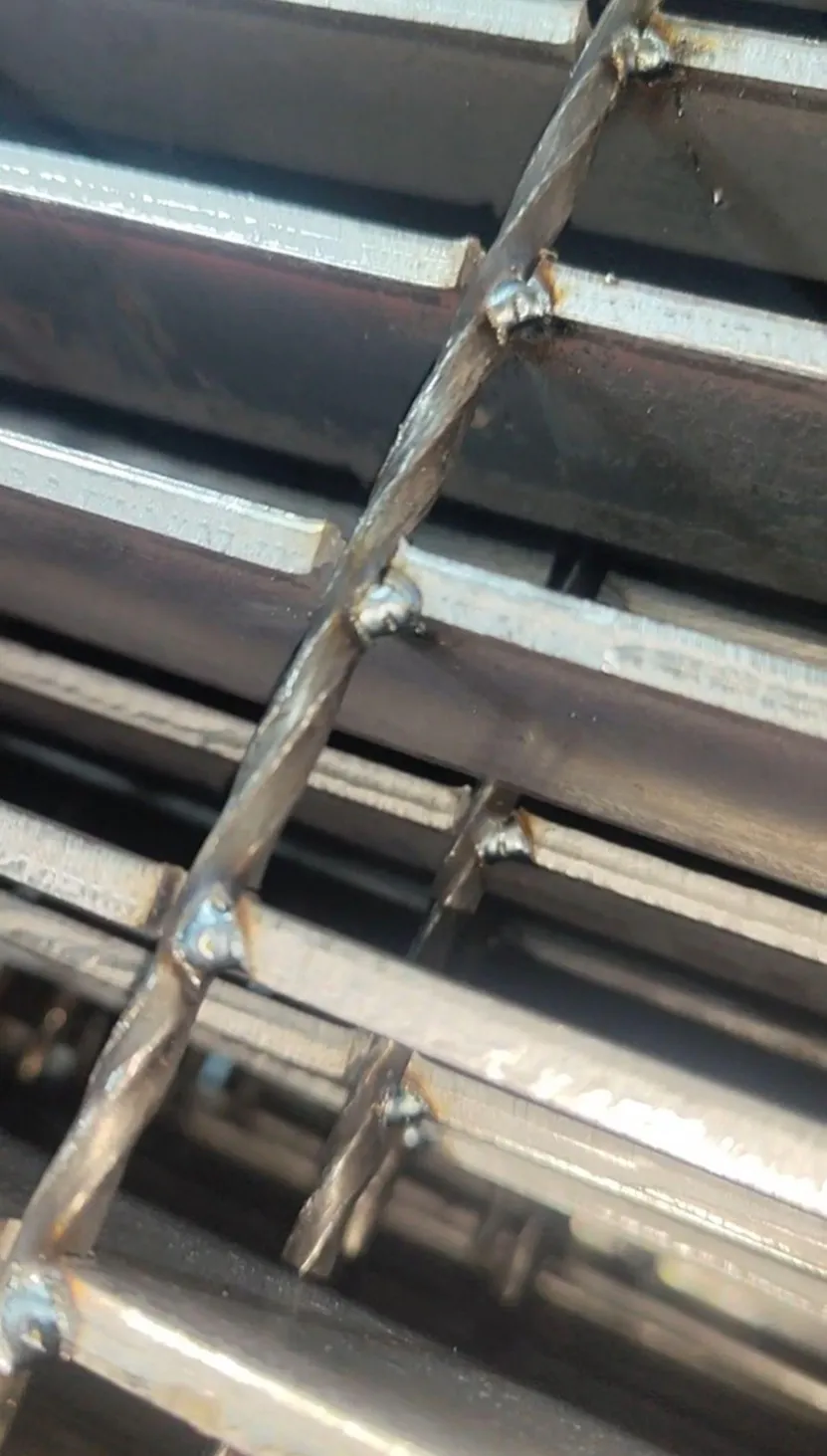
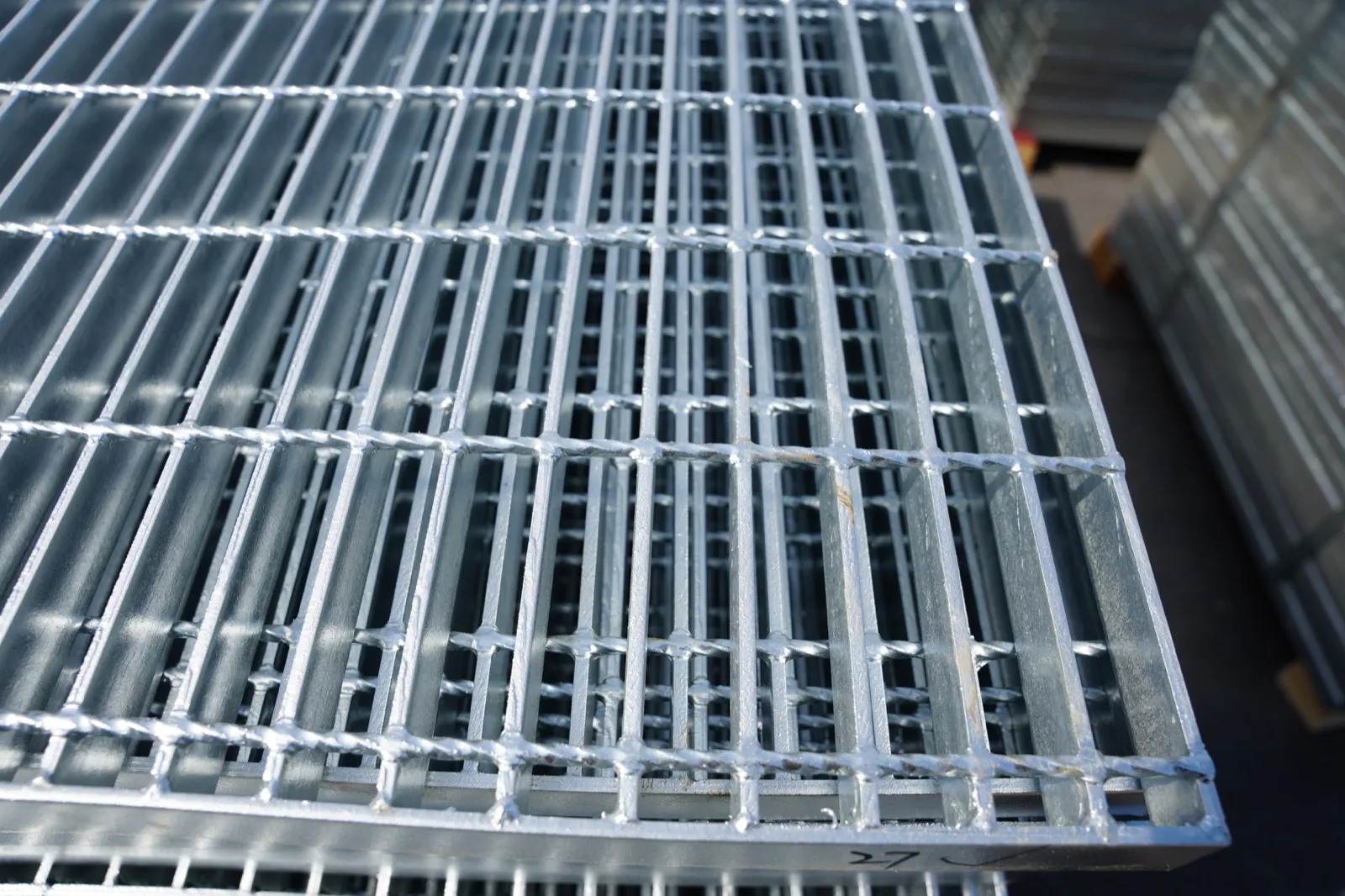
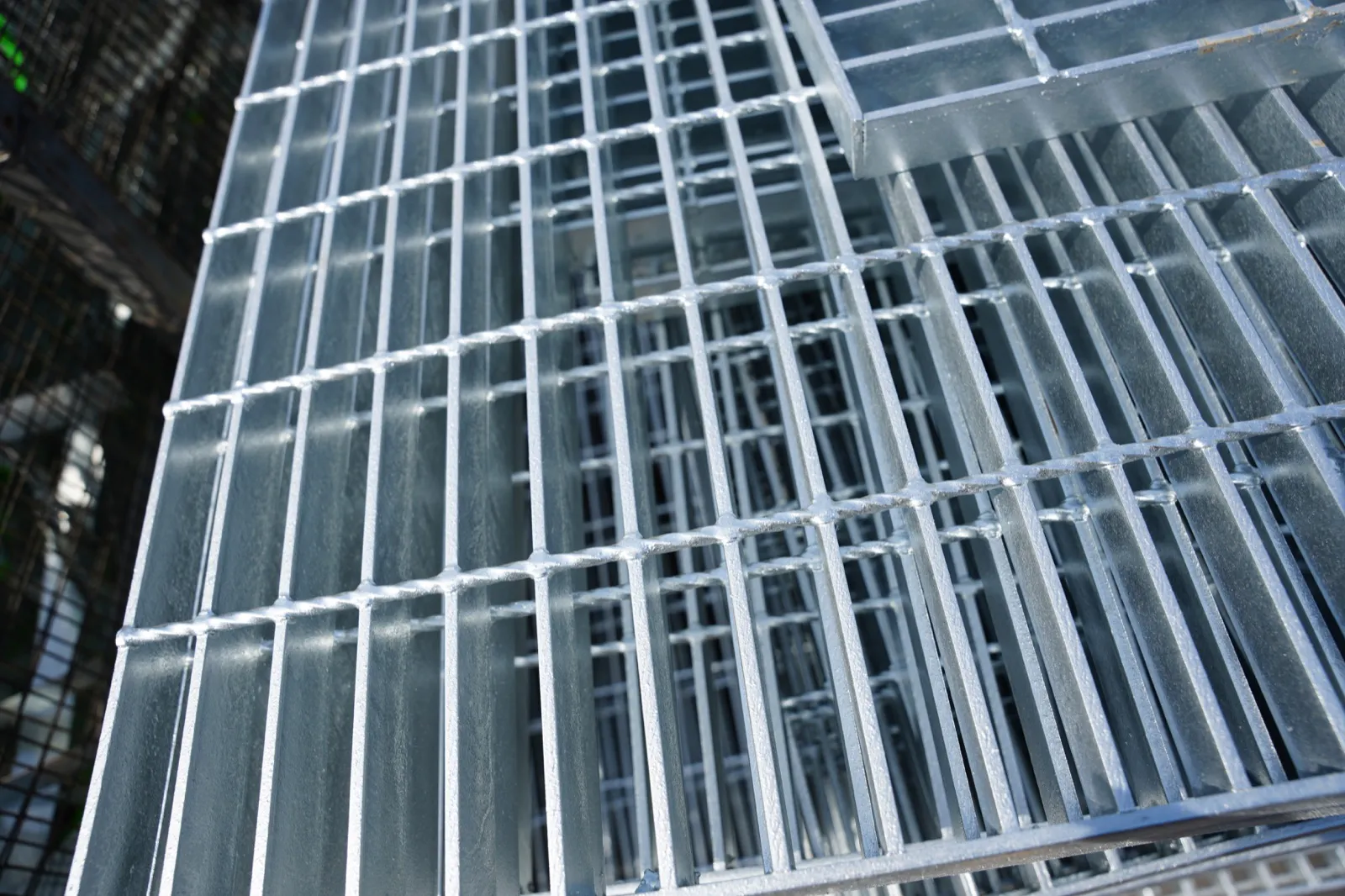
Welded steel grating — also called press-welded or forge-welded bar grating — joins each cross bar to every bearing bar at their intersection by resistance welding. The result is a rigid, one-piece panel that carries load along the bearing bar direction, keeps precise and uniform openings, and needs no further assembly on site.
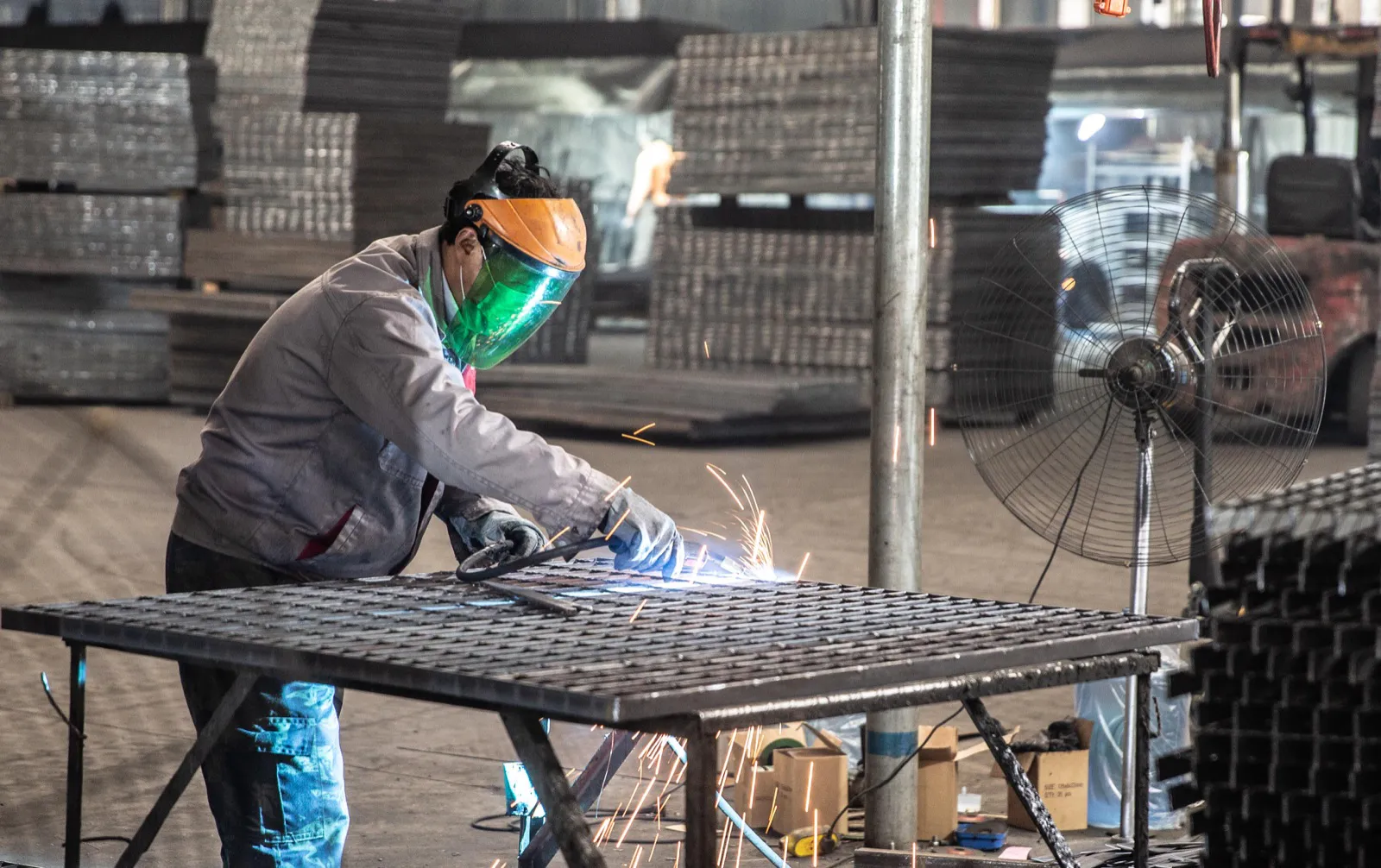
Two production routes cover different order types. Automated press-welding lines produce standard panels quickly and economically at consistent quality — the right choice for volume platform and walkway projects. Skilled manual welders handle what machines cannot: irregular shapes, fan and circular panels, heavy sections and non-standard bar arrangements.
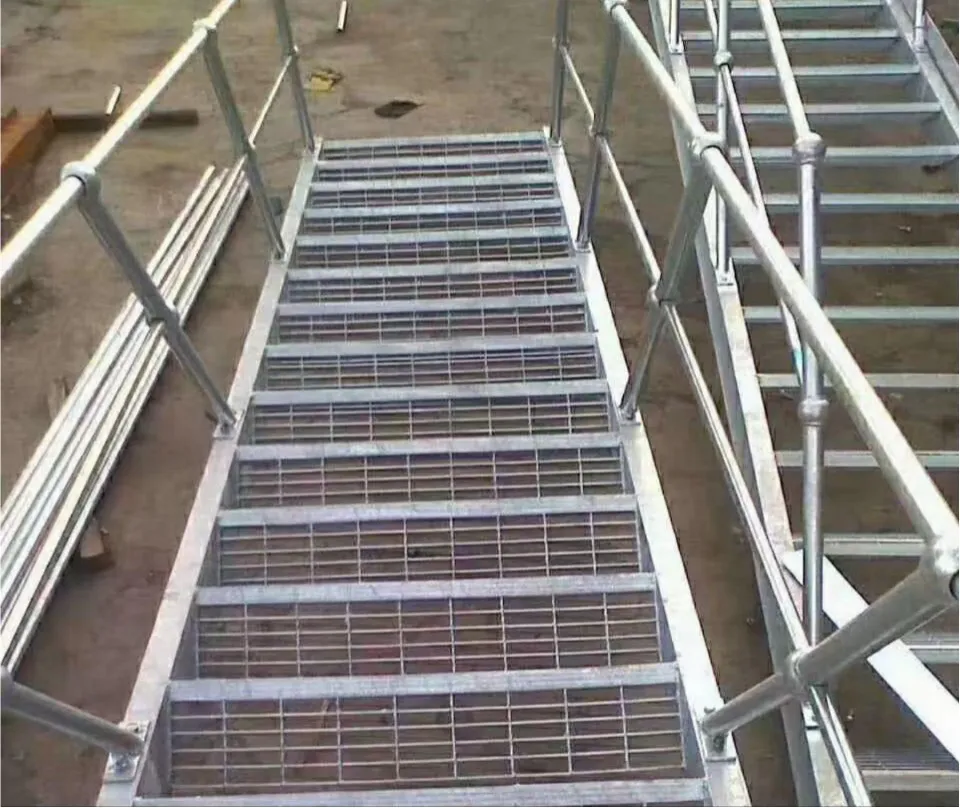
Because welding suits both carbon steel and stainless steel and accepts banding, cut-outs, toe plates and secondary fabrication, welded grating is the default choice for industrial platforms, walkways, stair treads and trench covers worldwide.

Applications
Where Welded Steel Grating Is Used
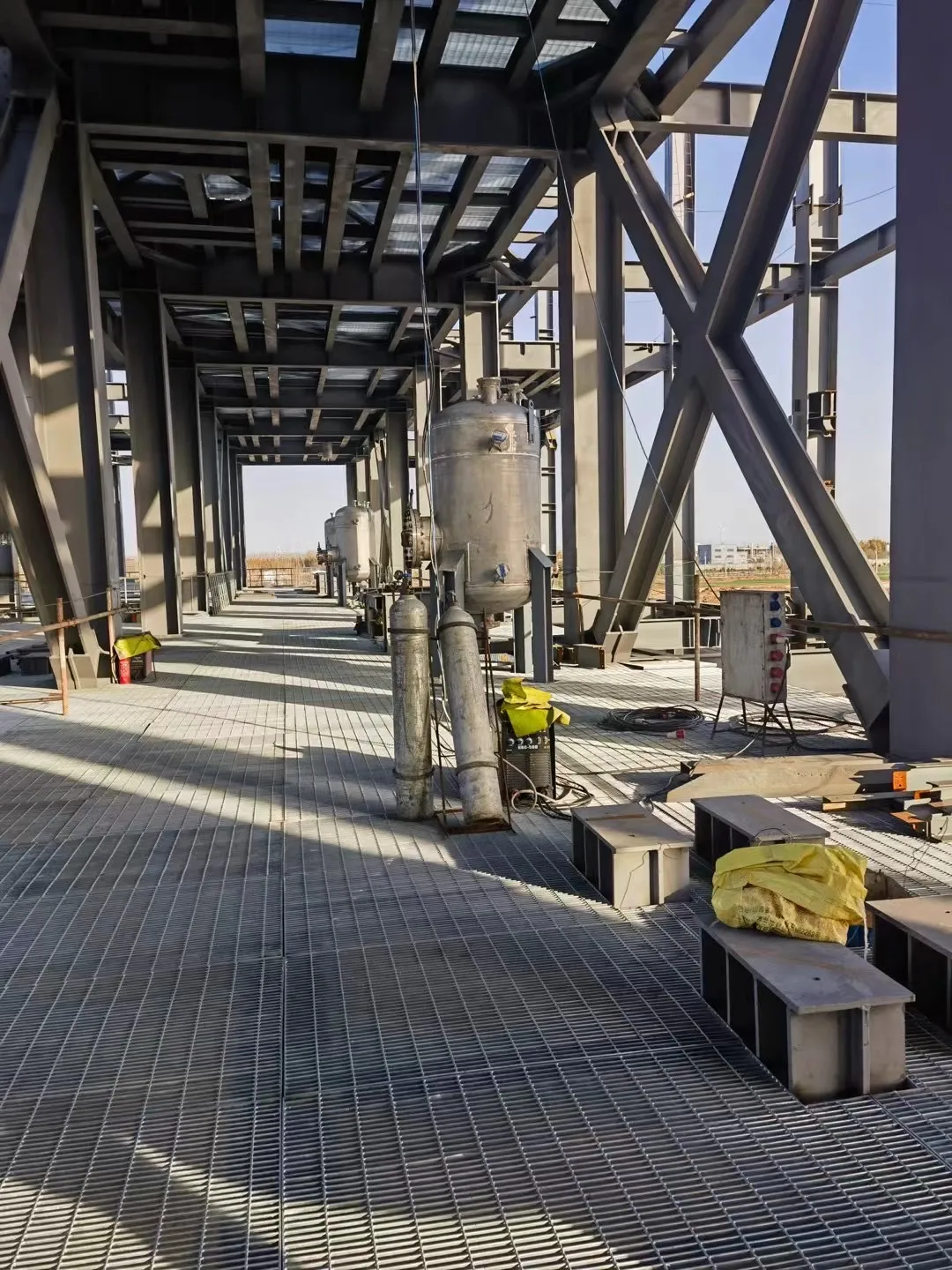
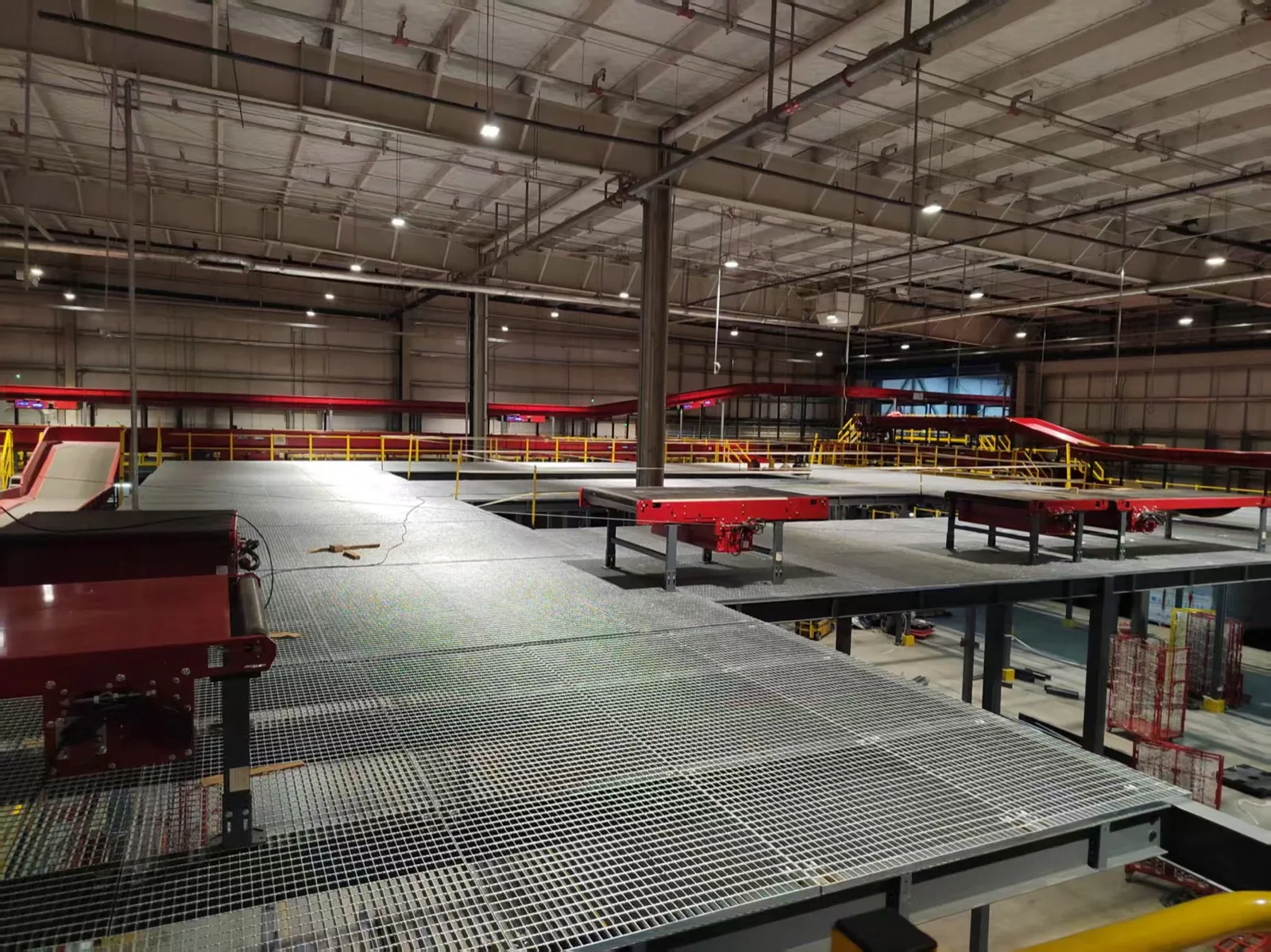
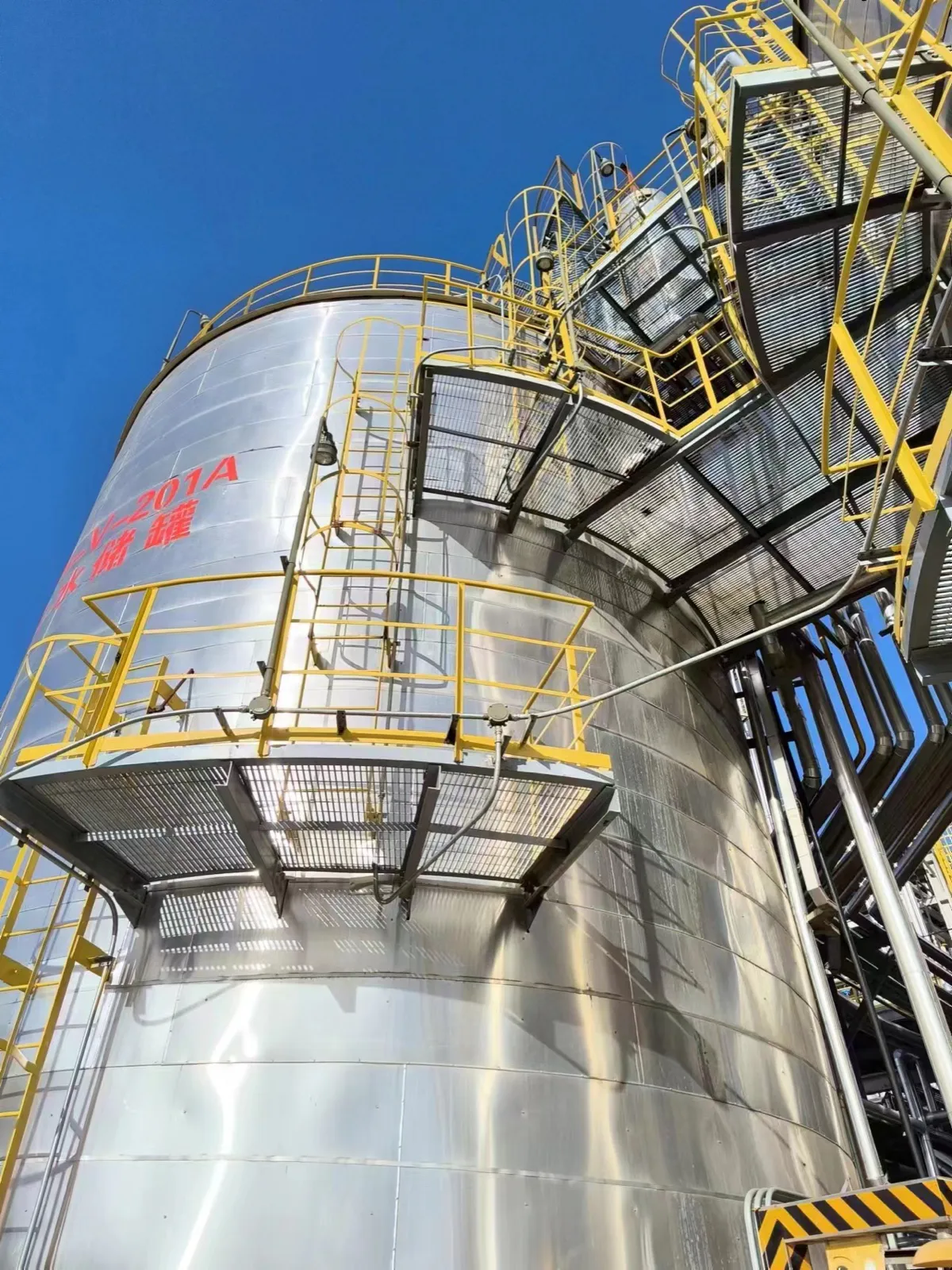
Industrial Platform Grating
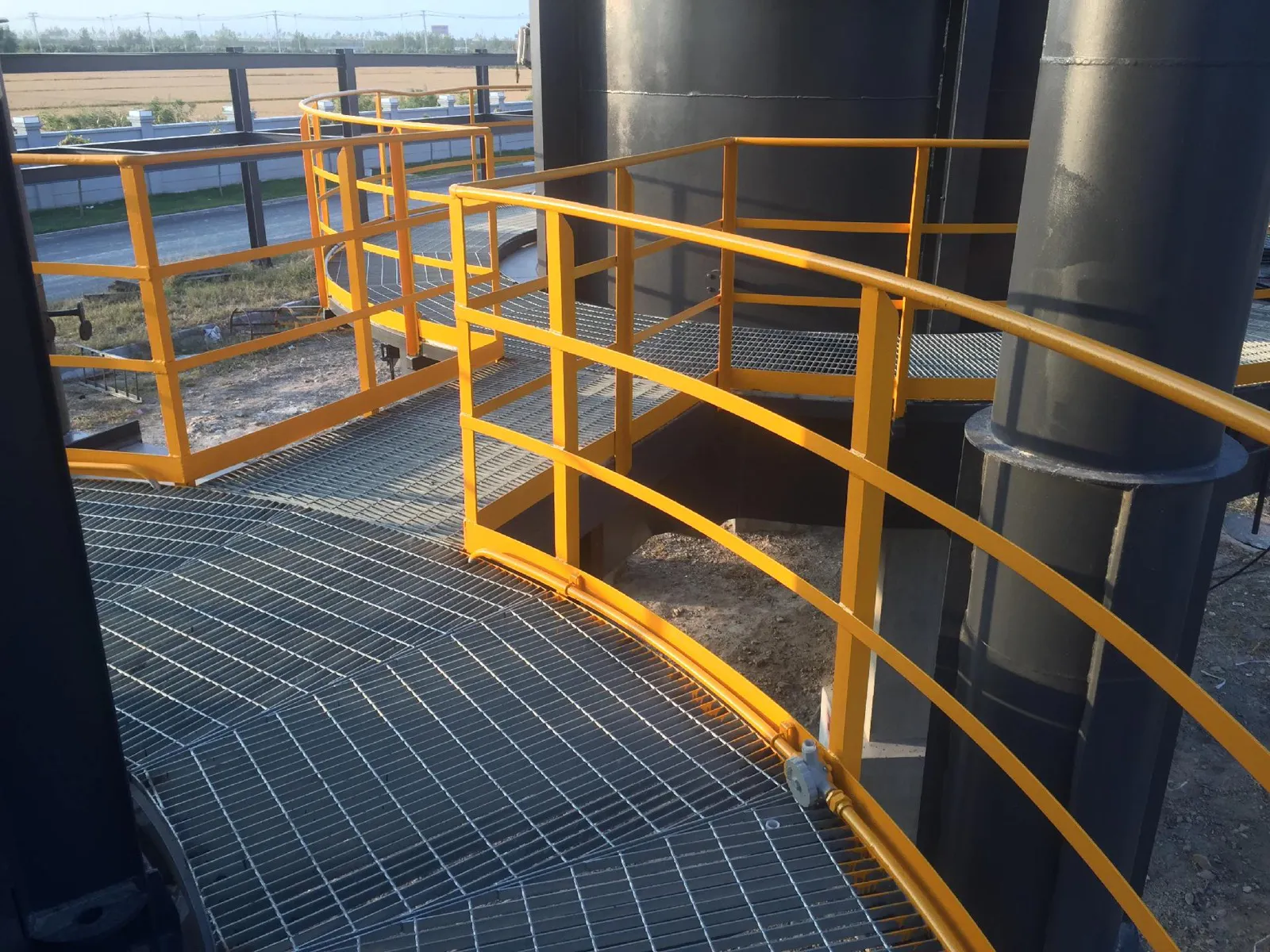
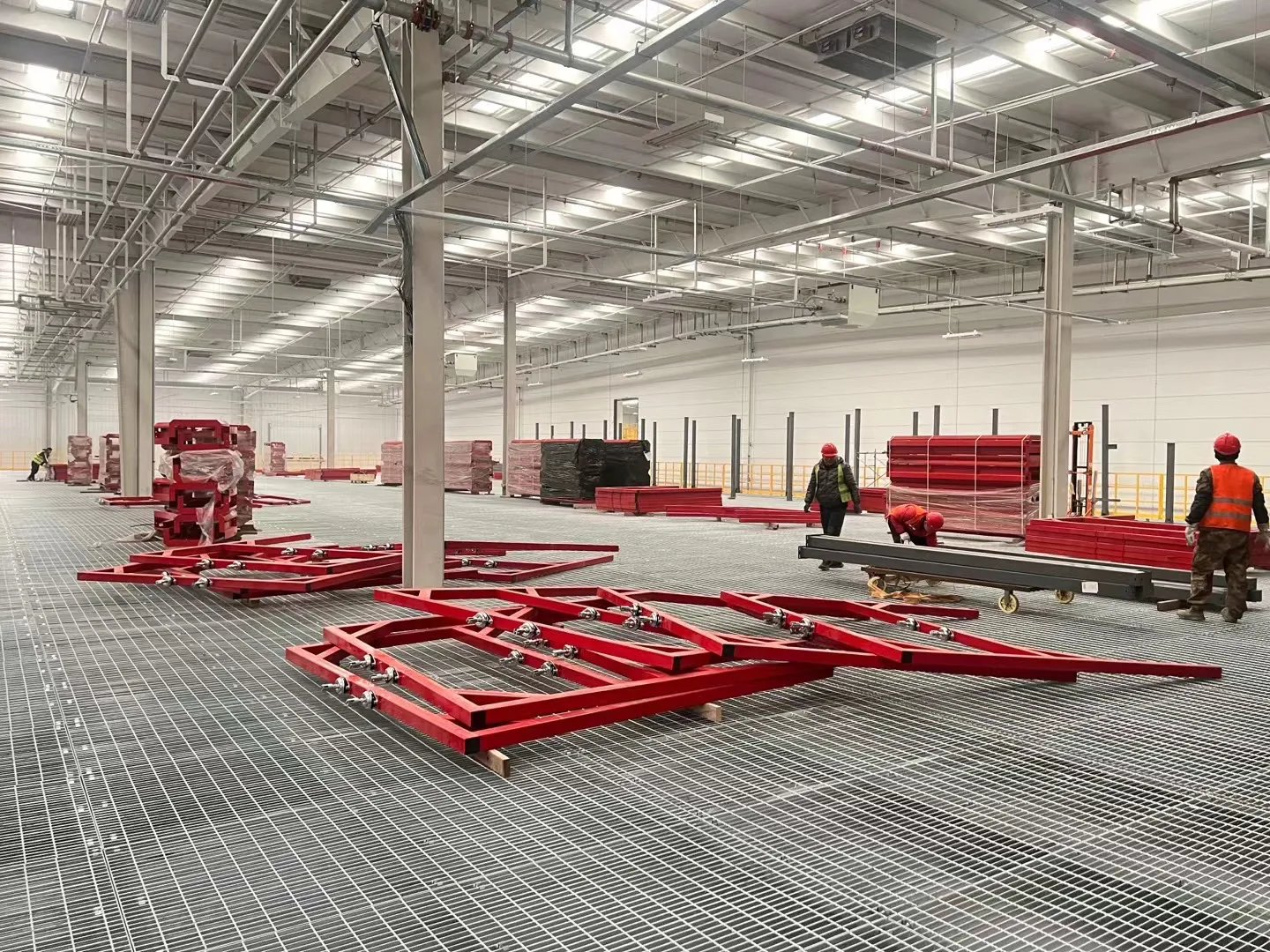
Open-grid flooring for chemical plants, equipment platforms and mezzanines — strength, drainage and ventilation in one panel.
View application
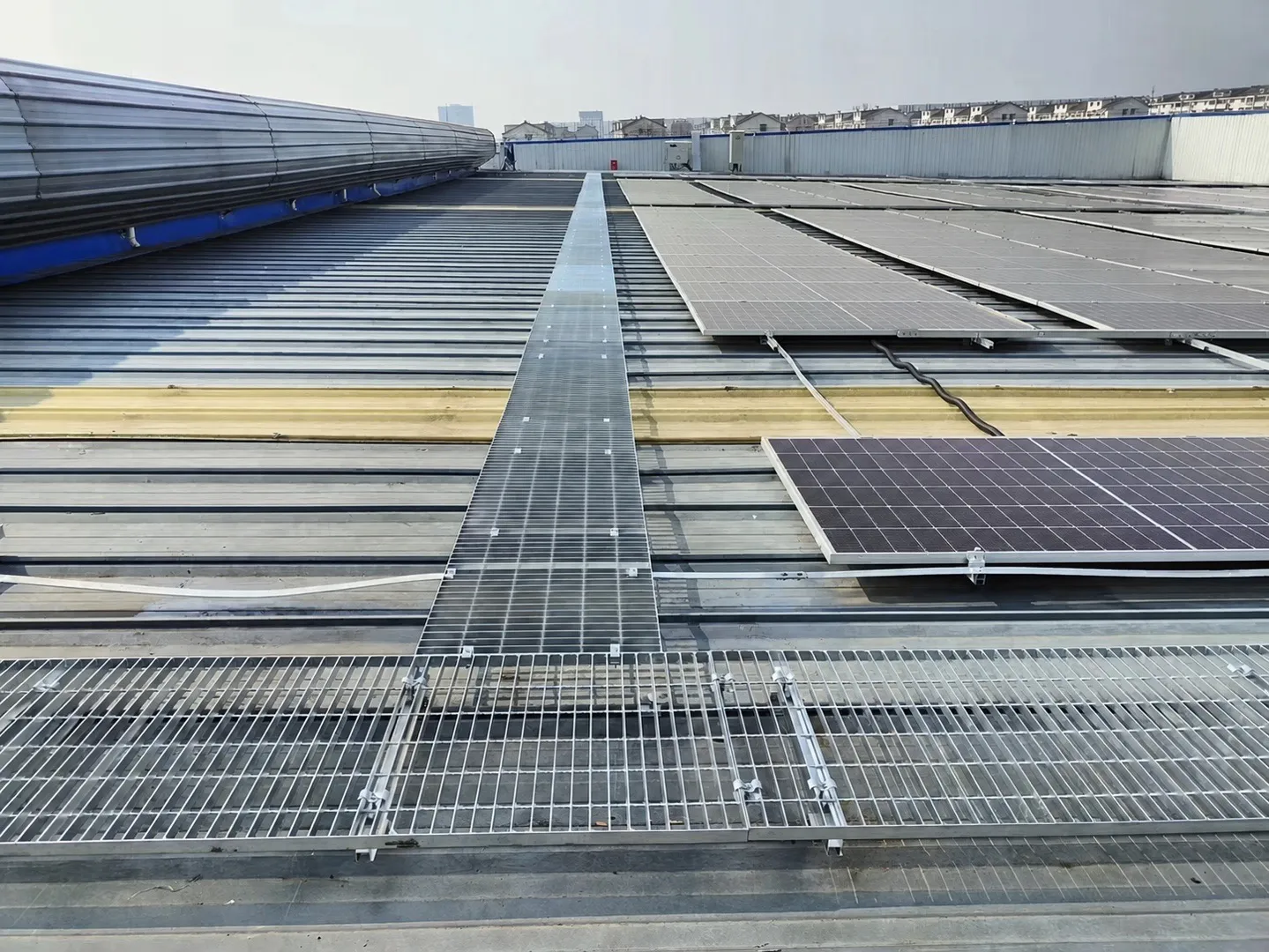
Walkway & Catwalk Grating
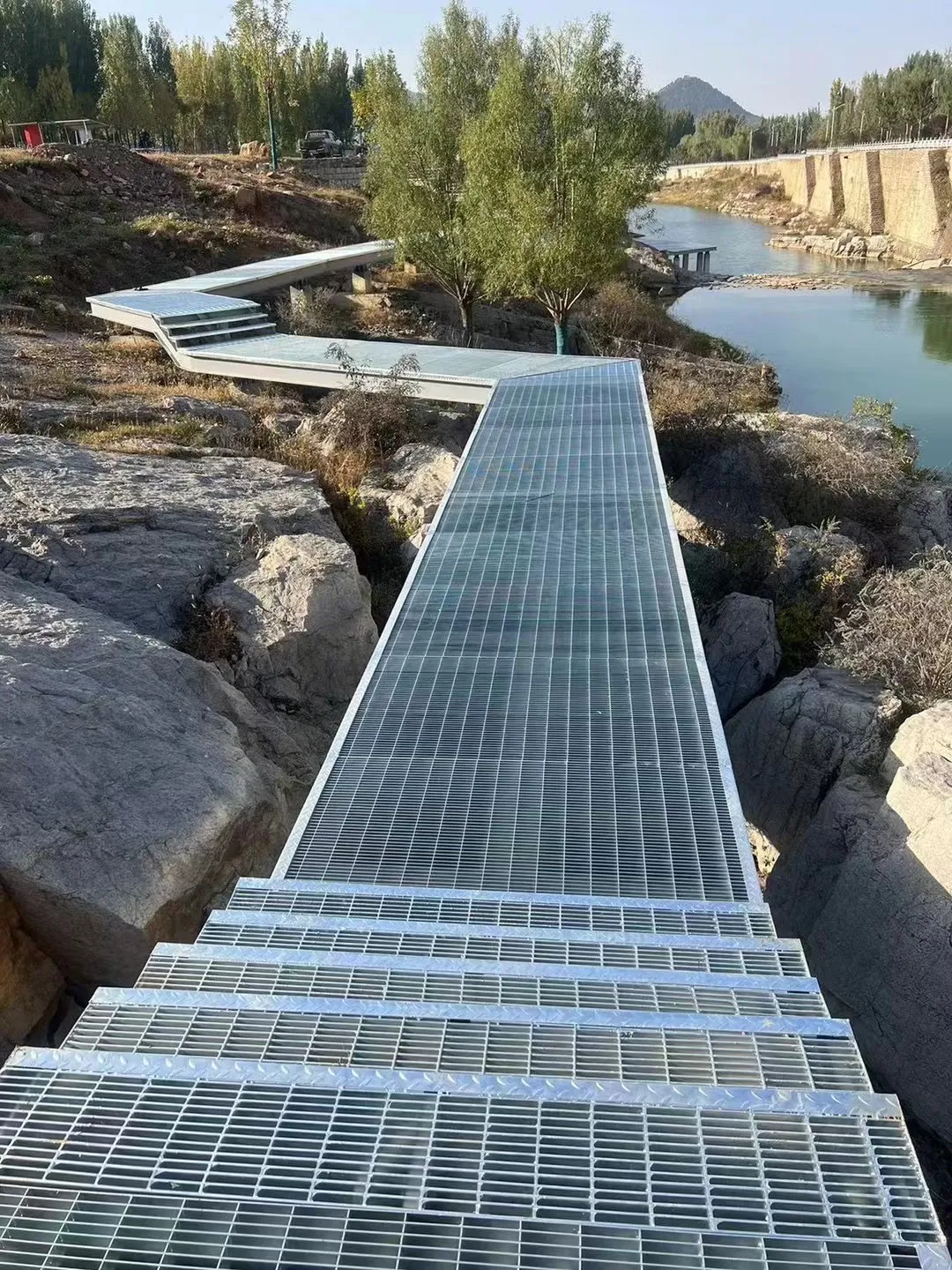
Safe, drained, ventilated walkways for photovoltaic arrays, pipe racks, tank farms and roof access routes.
View application
Trench Covers & Drainage
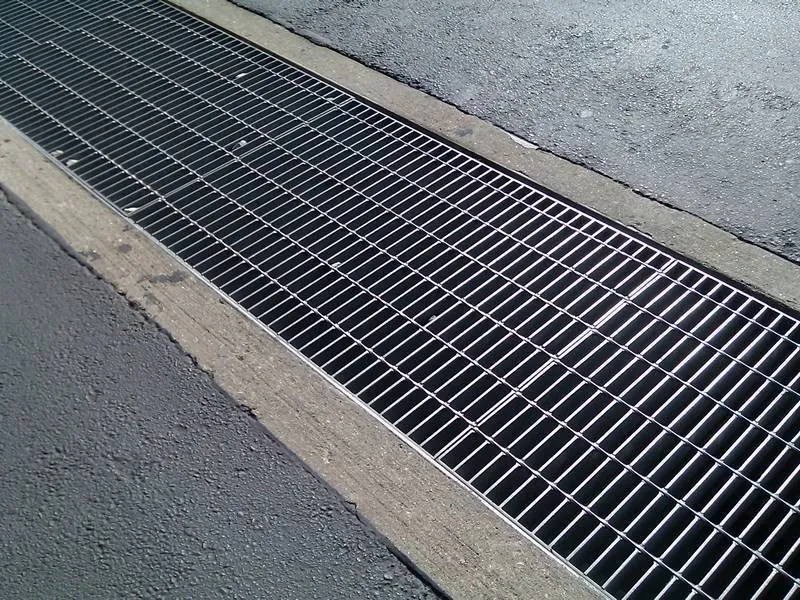
Drainage covers that keep water moving and traffic safe — from pedestrian channels to truck crossings.
View applicationSpecifications
Specification Options
| Item | Options | Notes |
|---|---|---|
| Material | Carbon steel Q235 / Q355 (comparable to ASTM A36 / S235JR / S355JR); SS304 / SS316L | Supplied per project specification with MTC |
| Bearing bar size | 20 × 3 mm to 100 × 10 mm; common 25×3, 30×3, 32×5, 40×5, 50×5 mm | Sized to span and load |
| Bearing bar spacing | 30 / 40 / 60 mm; imperial 19-space (19-W-4), 15-space series | 30 mm most common for platforms |
| Cross bar | Twisted square bar at 50 / 100 mm (2″ / 4″) | 100 mm most economical; 50 mm limits falling objects |
| Surface type | Plain / serrated | Serrated for wet, oily, snowy or sloped areas |
| Finish | Hot-dip galvanized, painted or mill finish | Galvanized after fabrication per ASTM A123 / ISO 1461 or customer standard |
| Max panel size | Up to 6100 × 1000/1200 mm; 70–100 kg per panel handling limit | Larger areas supplied as split, numbered panels |
| Fabrication | Banding, cut-outs, toe plates, lifting holes, clips | Detailed from your layout drawings |
Variants
Recommended Types
Machine press-welded standard panels
Automated lines weld twisted cross bars to bearing bars at every intersection — fast, consistent and economical for volume platform and walkway orders.
Manually welded custom panels
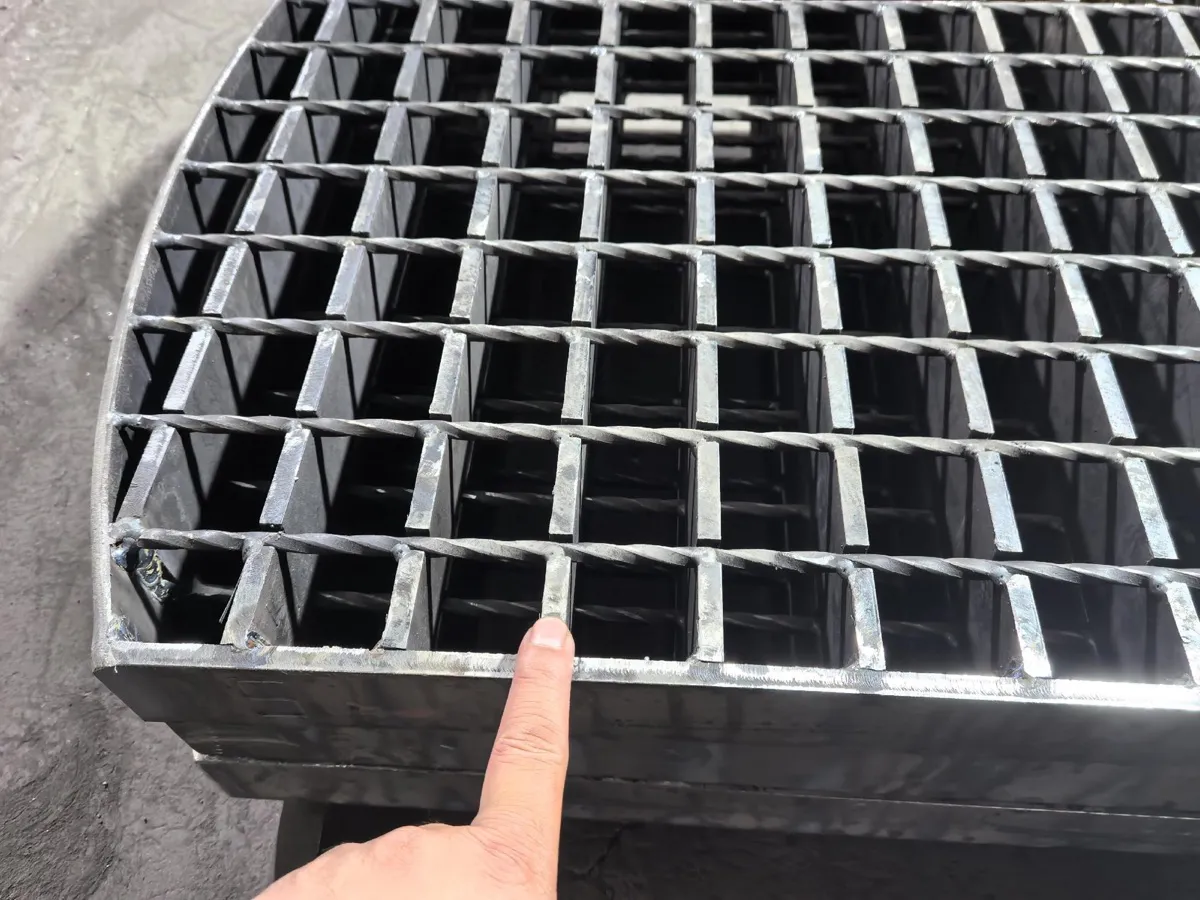
Experienced welders build irregular shapes, fan and circular panels, heavy sections and non-standard bar arrangements that automated lines cannot process.
Serrated welded grating
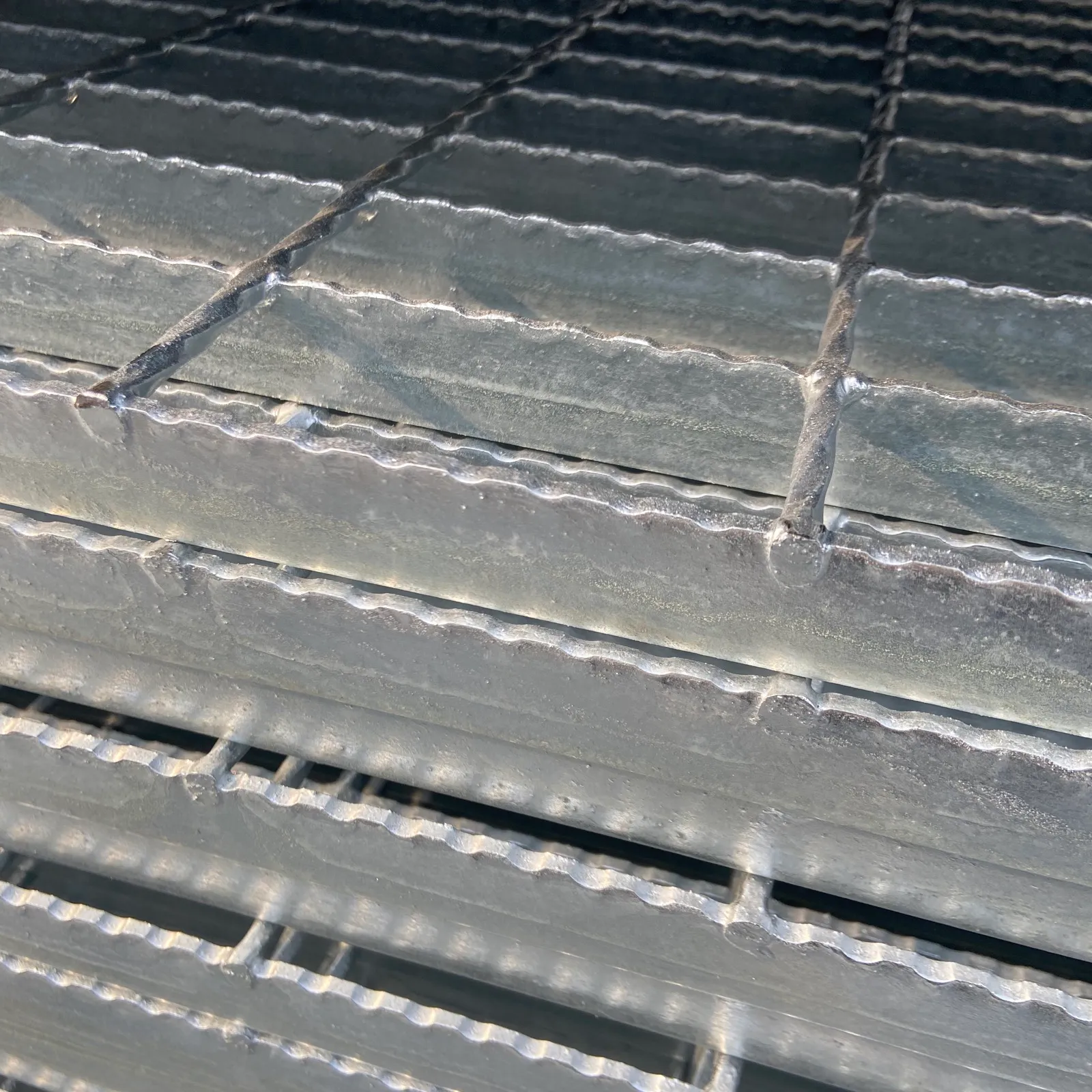
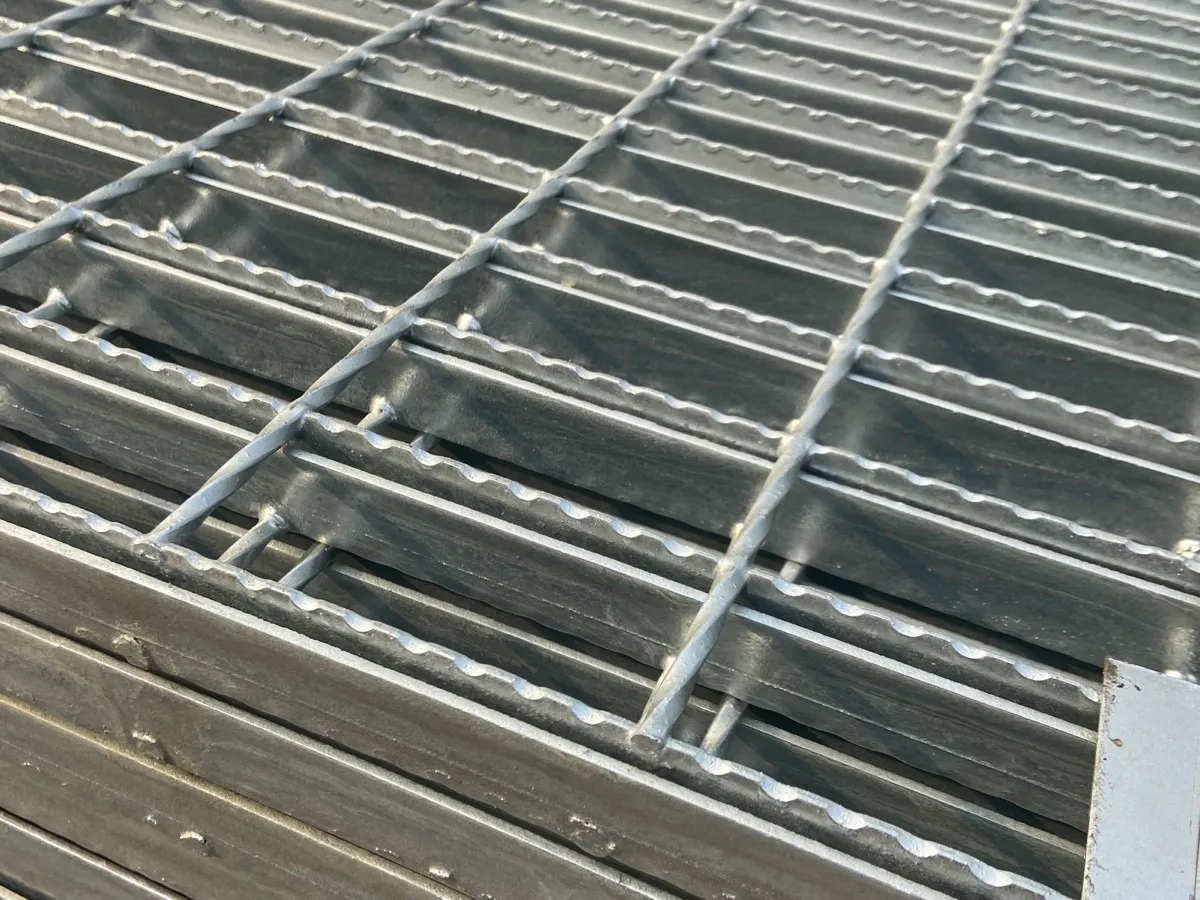
Toothed bearing bars add slip resistance for wet, oily, snowy or inclined walking surfaces and stair treads.
Heavy-duty welded grating
Deeper, thicker bearing bars for forklift and vehicle loads — always confirmed against span, wheel load and support conditions before quotation.
Which steels suit press-welding
Press-welding has to create a repeatable intersection between the bearing bar and cross bar, so steel grade, bar section, surface condition and machine settings belong in the same production decision. Q235 is the usual starting point for standard industrial panels because it is widely available and suited to established resistance-welding routines, subject to the specified material certificate.
Q355 can be used where the engineering selection calls for higher yield strength, but the grade does not make the weld point stronger by itself. Bar size, cross-bar penetration, current, pressure and inspection still need to match the chosen section. Stainless 304 or 316L requires a controlled stainless fabrication route and the specified cleaning or passivation after welding.
Aluminum is not a drop-in material for a standard steel press-welding line: its oxide layer and different electrical and thermal behavior require another joining process. Aluminum grating therefore normally starts with a swage-locked, dovetail pressure-locked or separately qualified welded construction. If carbon-steel panels will be galvanized, complete welding and cutting first; coating detail is covered on the related Galvanized Steel Grating page.
- Q235: the common base steel for repeatable, high-volume press-welded panels
- Q355: specify from the load and span review, then verify the press-weld settings and intersection quality
- SS304 / SS316L: use stainless-dedicated handling and the project-specified post-weld treatment
- Aluminum: choose a compatible locking or qualified aluminum-welding route instead of assuming the steel process applies
Fabrication & QC
Fabrication & Quality Notes
- Bearing bars and cross bars are checked against mill test certificates before cutting.
- Standard panels are press-welded on automated lines; irregular and heavy panels are manually welded by experienced welders.
- Cut-outs, banding, toe plates, lifting holes and clip positions follow the layout drawings.
- Each panel is inspected for bar size and spacing, weld points, flatness and overall dimensions against the drawing.
- Tall, thin bearing bars (for example 3 mm thick above 50 mm depth) are reviewed for galvanizing distortion risk before production.
Packaging
Packaging & Delivery
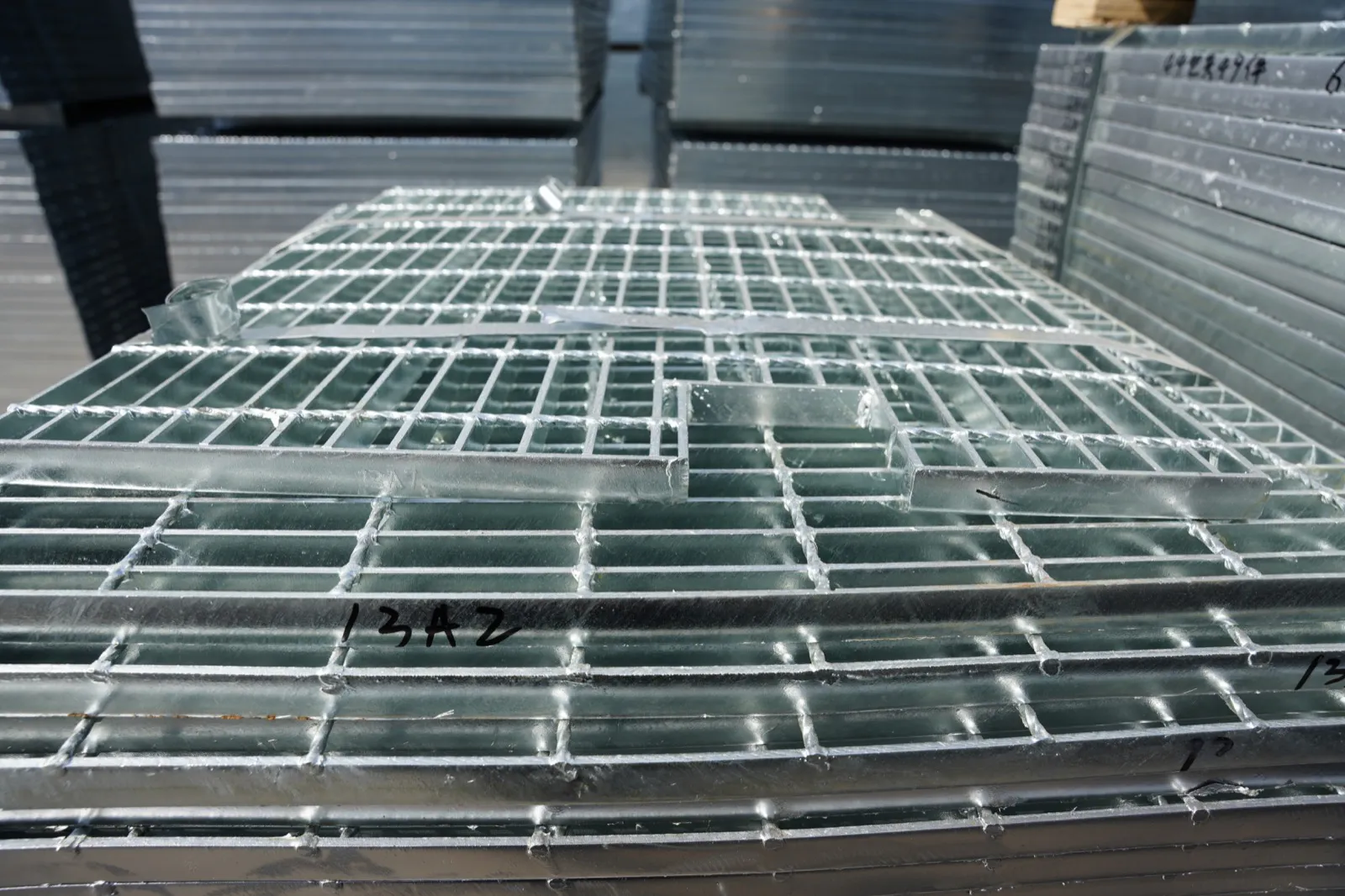
- Panels bundled with steel straps or stacked on pallets with edge protection.
- Project panel numbering and packing lists matched to layout drawings for site sequence.
- Steel frame crates available for irregular, stainless or high-value panels.
- Ventilation spacing on galvanized bundles to reduce wet-storage staining during sea freight.
Gallery
Welded Steel Grating in Detail


FAQ
Welded Steel Grating FAQs
What is the difference between machine-welded and manually welded grating?
What does 19-W-4 mean?
Which bearing bar spacing should I choose?
Can you fabricate welded grating to my drawings?
What is the minimum order quantity?
What is the production lead time?
What is the maximum panel size you can weld?
Send Your Drawings, Get a Confirmed Specification
Complete inquiries are typically answered within 24 hours during business hours.