Full press-locked grid
A clean, regular grid for industrial flooring, screens and visible access areas.

Engineering
Steel Grating Load Tables: How to Read and Use Them Steel Grating Sizes and Dimensions: What Each Number Means Steel Grating Standards Guide: NAAMM, ASTM, ISO and Regional CodesEngineered Around Your Load & Span
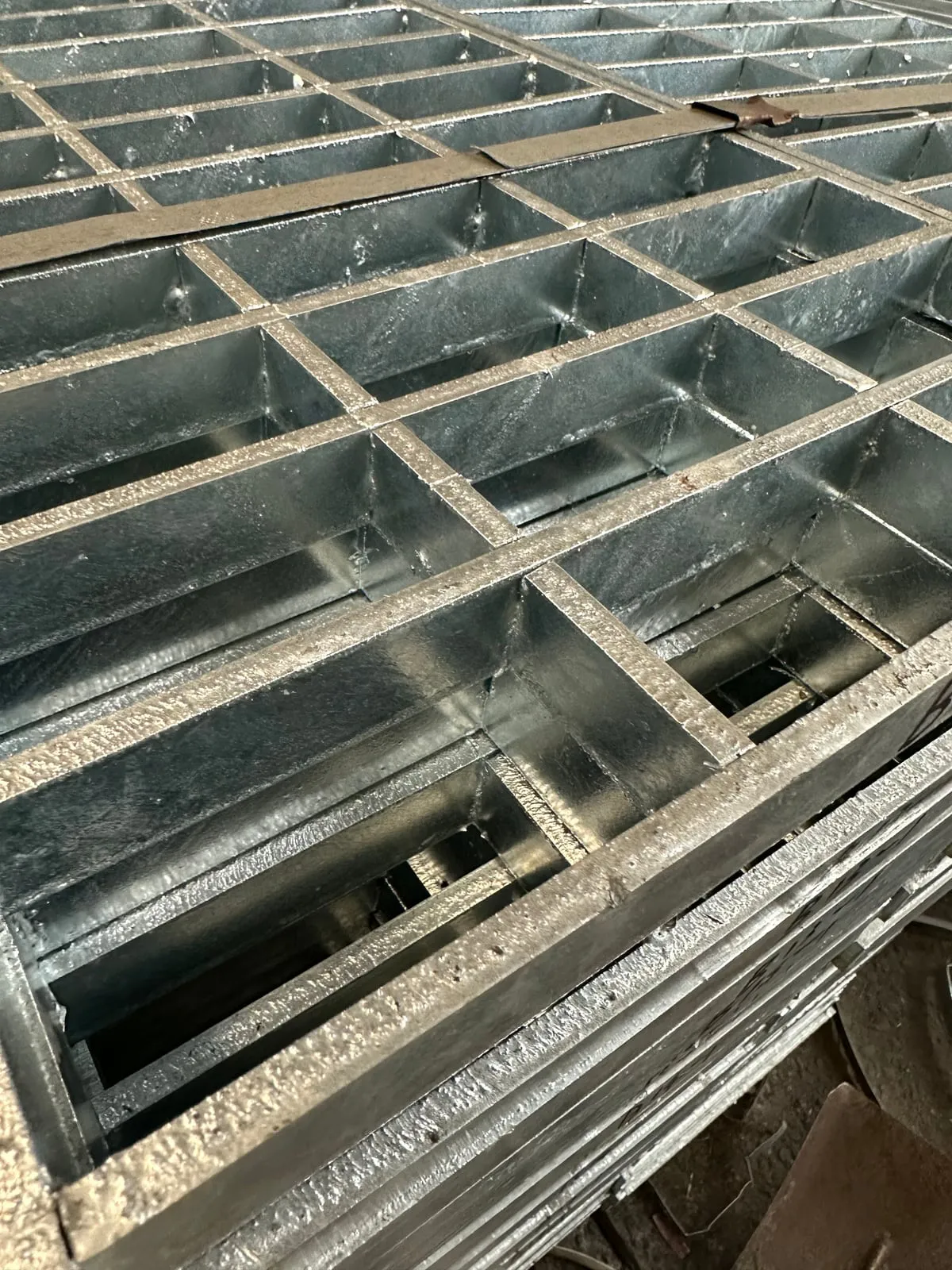
Press-locked grating — also called pressure-locked grating in some markets — is assembled by pressing flat cross bars into pre-slotted bearing bars. DONGFU panels are press-locked first, then receive supplementary welding where the approved drawing requires it. Bar depth, spacing, material, layout and finish are confirmed before quotation.
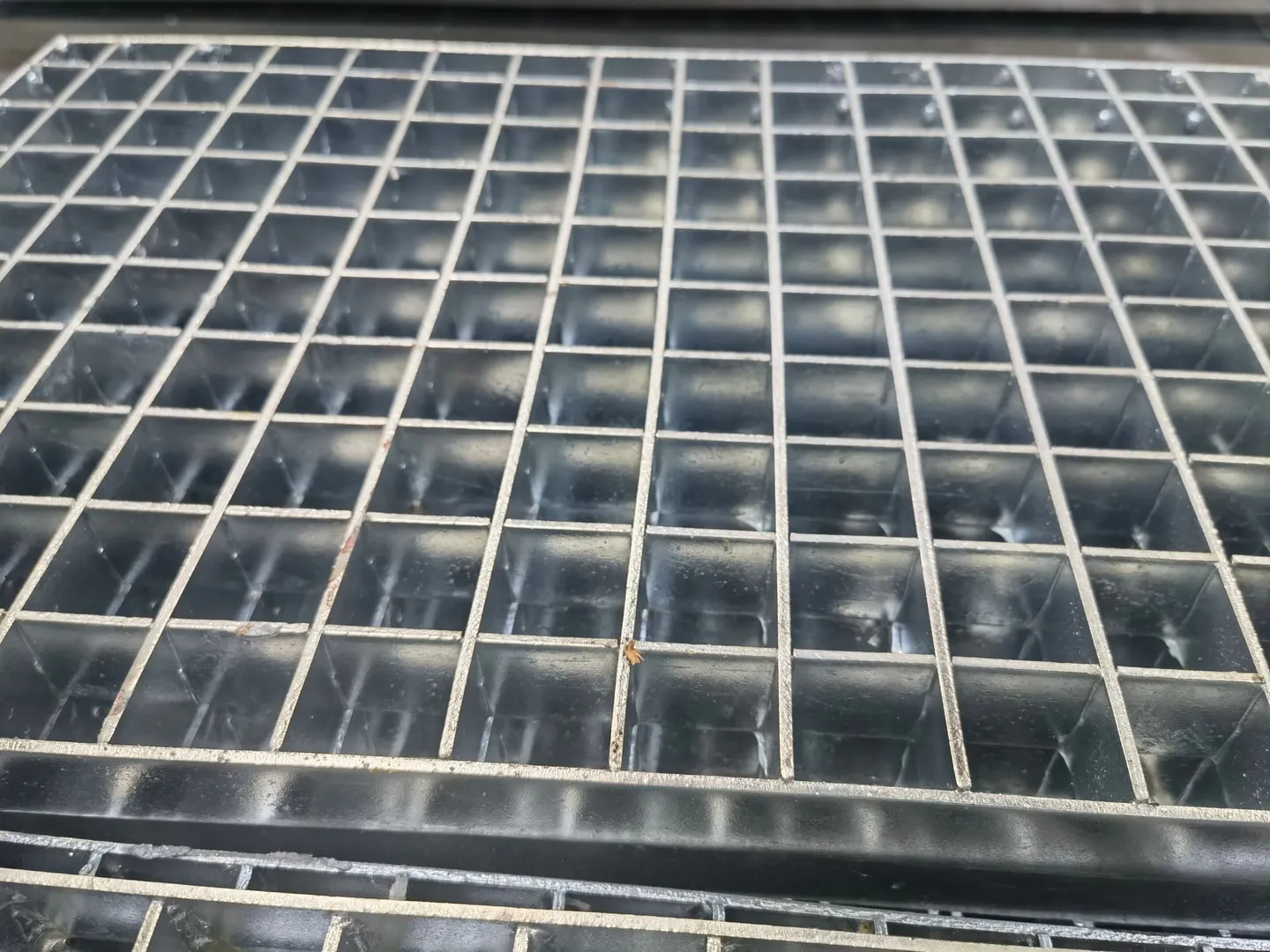
Press-locked construction is useful where the project needs a regular visual grid, flexible spacing or a material and finish combination that should be reviewed separately from standard welded grating. The bearing bars are slotted first, then flat cross bars are pressed into position to establish the primary grid.
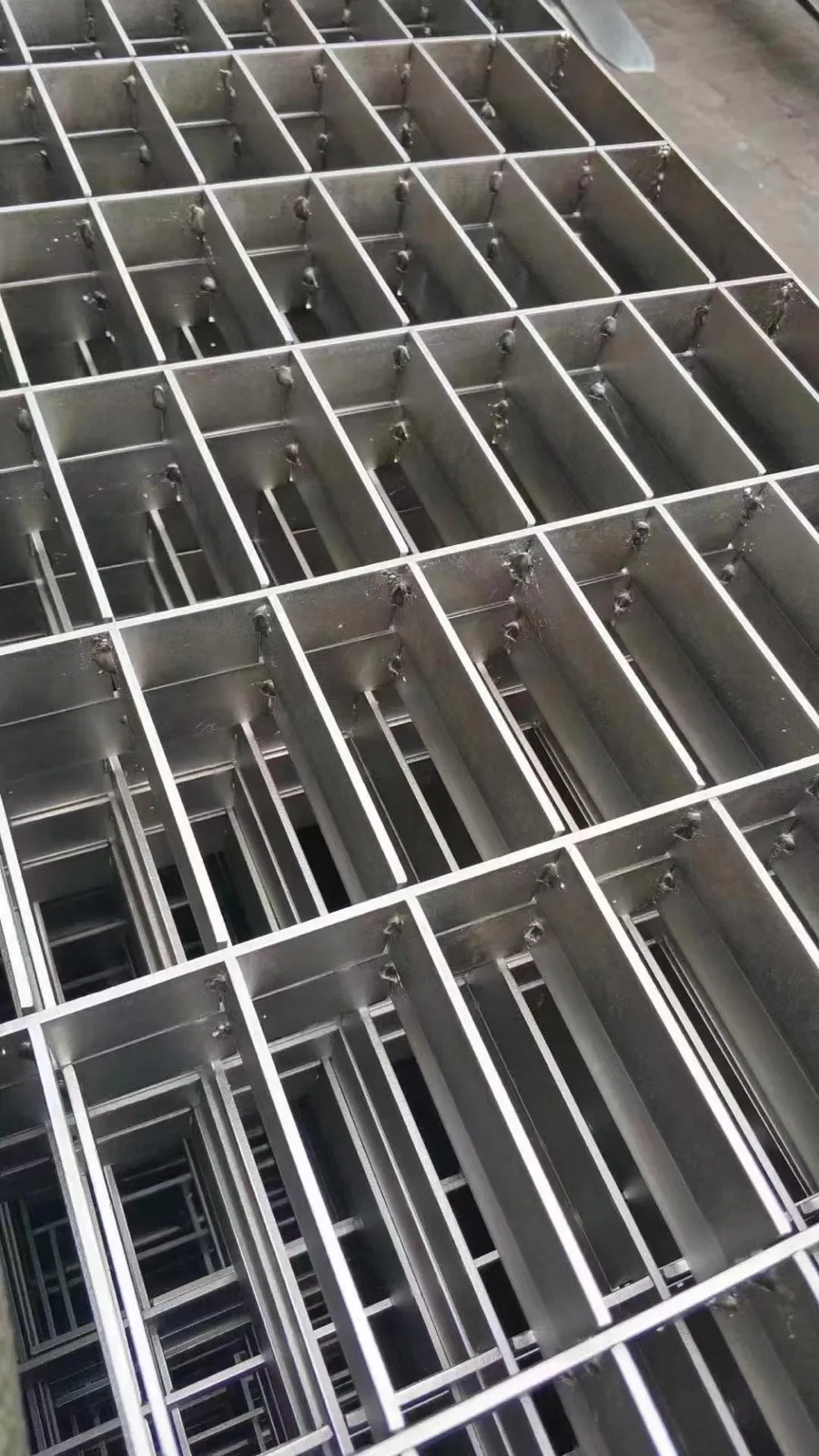
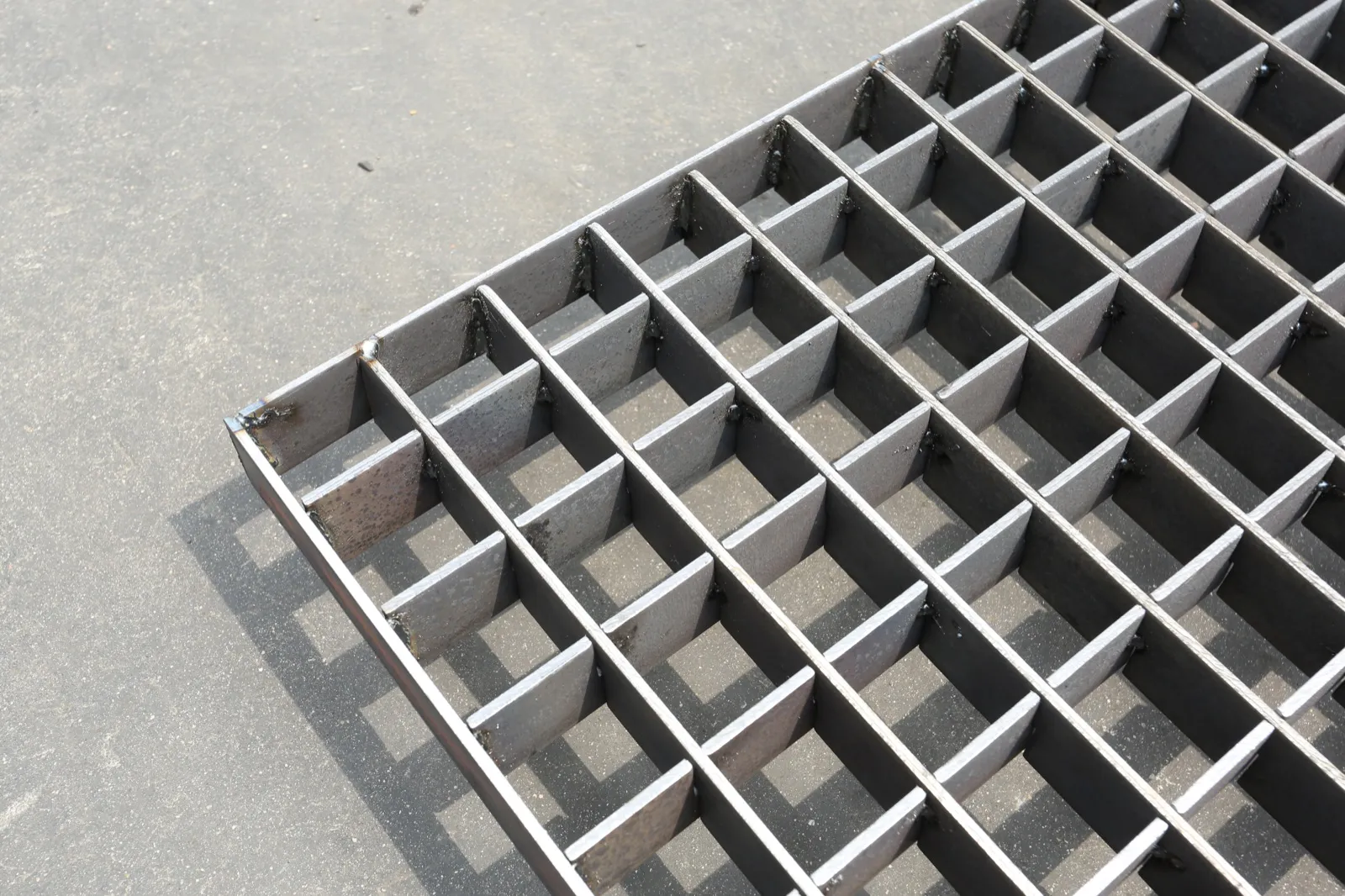
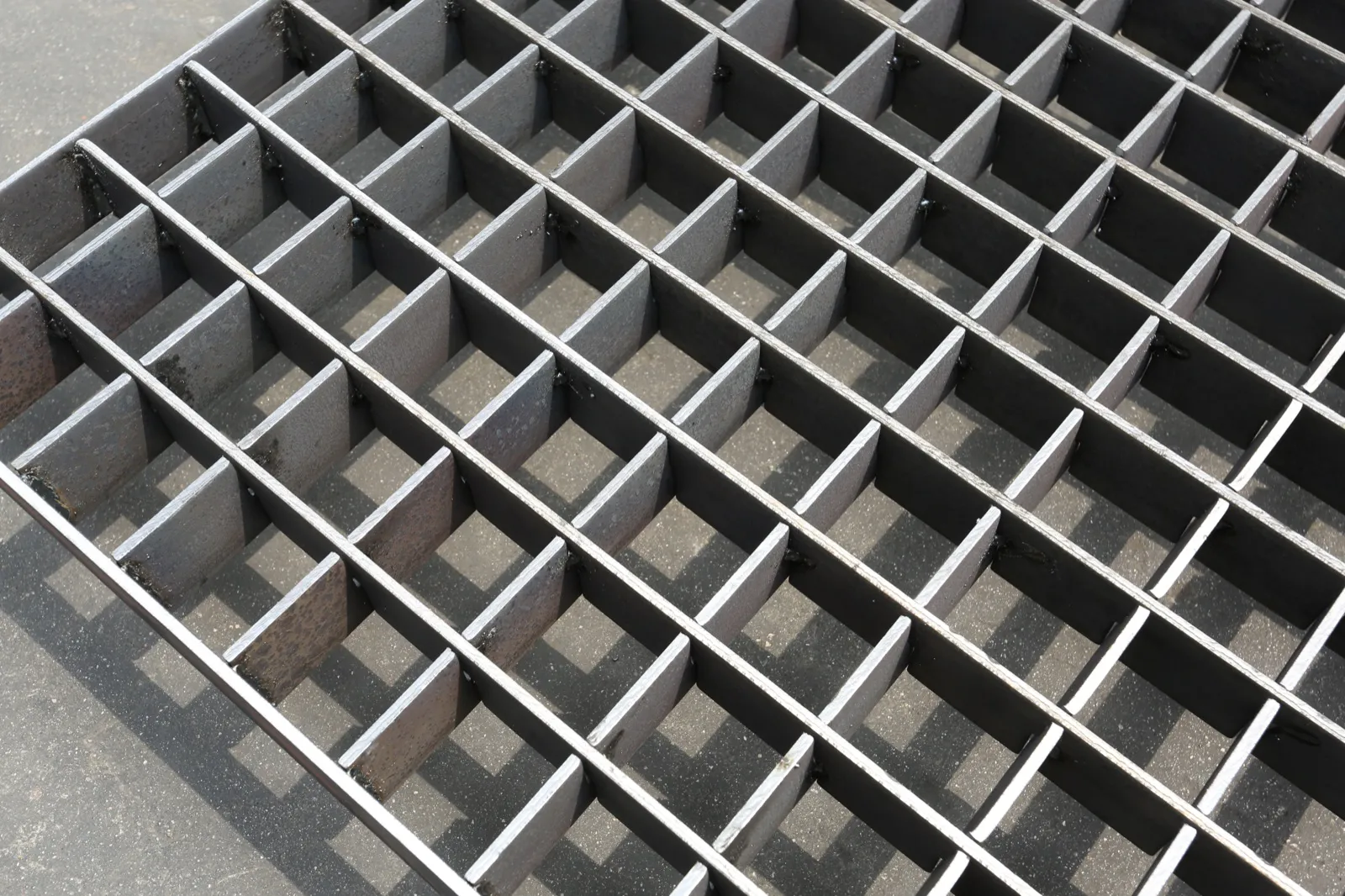
On the DONGFU panels shown on this page, selected joints and fabrication details receive supplementary welds after press-locking. These welds complete the approved production drawing; they do not replace the mechanical locking method that defines the grid.
The construction name alone does not establish capacity. Bearing bar section, spacing, clear span, support condition, load type and the governing project standard still control the final selection.
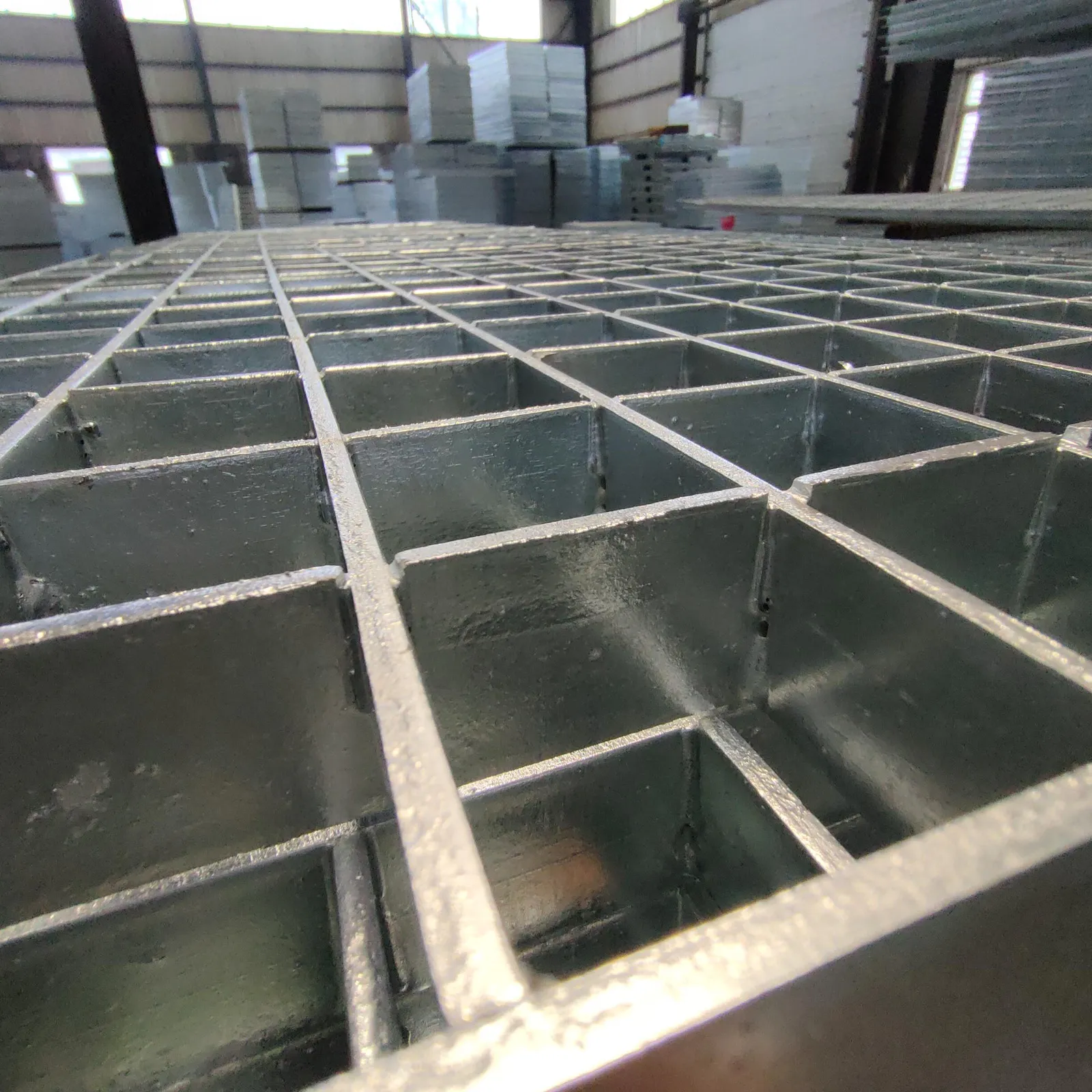
Depending on the selected bar profiles, the mechanically engaged cross bars can create a flush or near-flush upper grid with clean, repeated openings. This visual regularity is useful for screens and visible access areas, but the joint detail, bar orientation and supporting edges still need to be shown on the approved drawing.
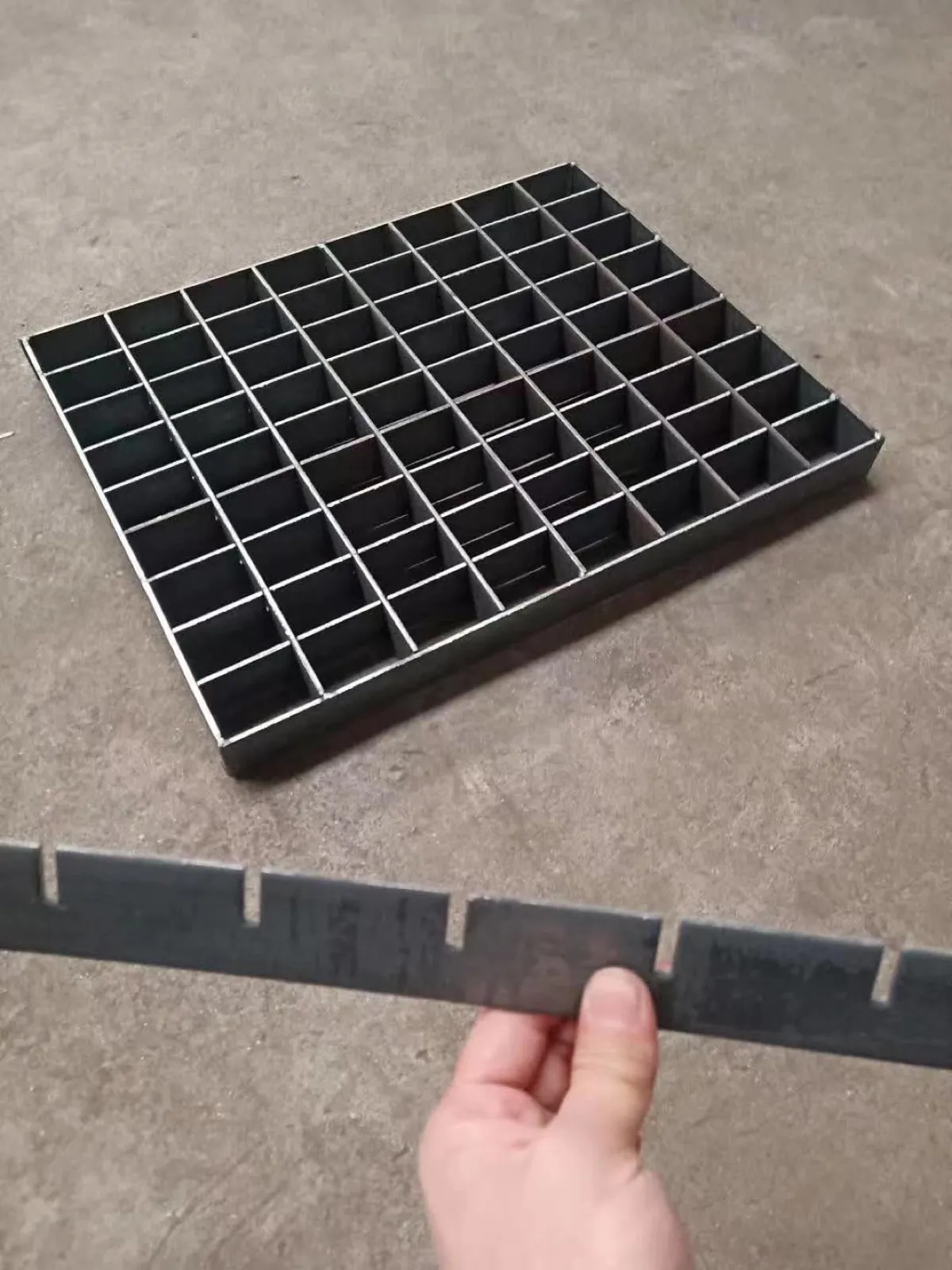
Construction Sequence
The production sequence matters. Mechanical locking establishes the grid; supplementary welding and fabrication are applied afterward only where the approved panel drawing requires them.
Bearing-bar slots, cross-bar profile and grid spacing are prepared to the confirmed drawing and checked before assembly.
Flat cross bars are aligned with the slots and pressed into the bearing bars to form the primary mechanical grid.
Selected joints, banding, cut-outs and other project details receive supplementary welding and finishing as shown on the approved production drawing.
Selection Guide
Construction type alone does not establish which option is stronger. Compare the joint method, bar profiles, required appearance, spacing, material, production quantity and the verified load case before selecting a route.
| Decision point | Press-locked grating | Welded grating |
|---|---|---|
| Primary grid formation | Flat cross bars are mechanically pressed into slotted bearing bars; selected joints may be supplementary-welded afterward. | Cross bars are joined to bearing bars by resistance press-welding or a qualified manual welding route. |
| Grid appearance | Clean, regular openings with flush or near-flush intersections depending on the selected bar profiles. | A familiar industrial grid with visible welded intersections and standard production patterns. |
| Typical production fit | Visible floors, screens, custom spacing and drawing-led panels where grid regularity matters. | Repeated standard panels and high-volume industrial platforms, walkways and covers. |
| Load selection | Confirm bearing-bar section, spacing, span, support condition and load type for the actual panel. | Confirm the same engineering inputs; welded construction alone does not establish capacity. |
Gallery
Specifications
| RFQ input | What to send | Why it matters |
|---|---|---|
| Material | Carbon steel, stainless steel or aluminum; state the required grade or alloy. | Material affects slot geometry, locking, supplementary welding and the available finish. |
| Bearing bar | Depth and thickness, or the required load together with the clear span. | The bearing-bar section and span are primary load-selection inputs. |
| Bearing bar spacing | Metric or imperial spacing series and any opening-size limit. | Spacing changes open area, appearance, small-object passage and load distribution. |
| Cross bar | Flat-bar profile, spacing and any flush-grid requirement. | These inputs define the slot pattern, grid appearance and locking detail. |
| Span and support | Clear span, bearing-bar direction, support width and load type. | Capacity cannot be confirmed from the construction name or panel size alone. |
| Surface and weld detail | Plain or serrated surface plus any required supplementary weld locations or inspection criteria. | The surface affects grip; weld requirements must match the approved production drawing. |
| Finish | Mill finish, hot-dip galvanized, passivated, anodized, painted or coated as applicable. | Finish selection affects tolerances, appearance and the production sequence. |
| Panel layout | Panel dimensions, cut-outs, banding, piece marks, support edges and removable areas. | A layout drawing prevents incorrect bearing direction and unsuitable panel divisions. |
| Order information | Quantity, destination, project standard and required documentation. | These inputs determine the practical production, packing and quotation route. |
Variants
A clean, regular grid for industrial flooring, screens and visible access areas.
Press-locked grids completed with drawing-specified supplementary welds, edge banding, cut-outs and piece marks.
Applications
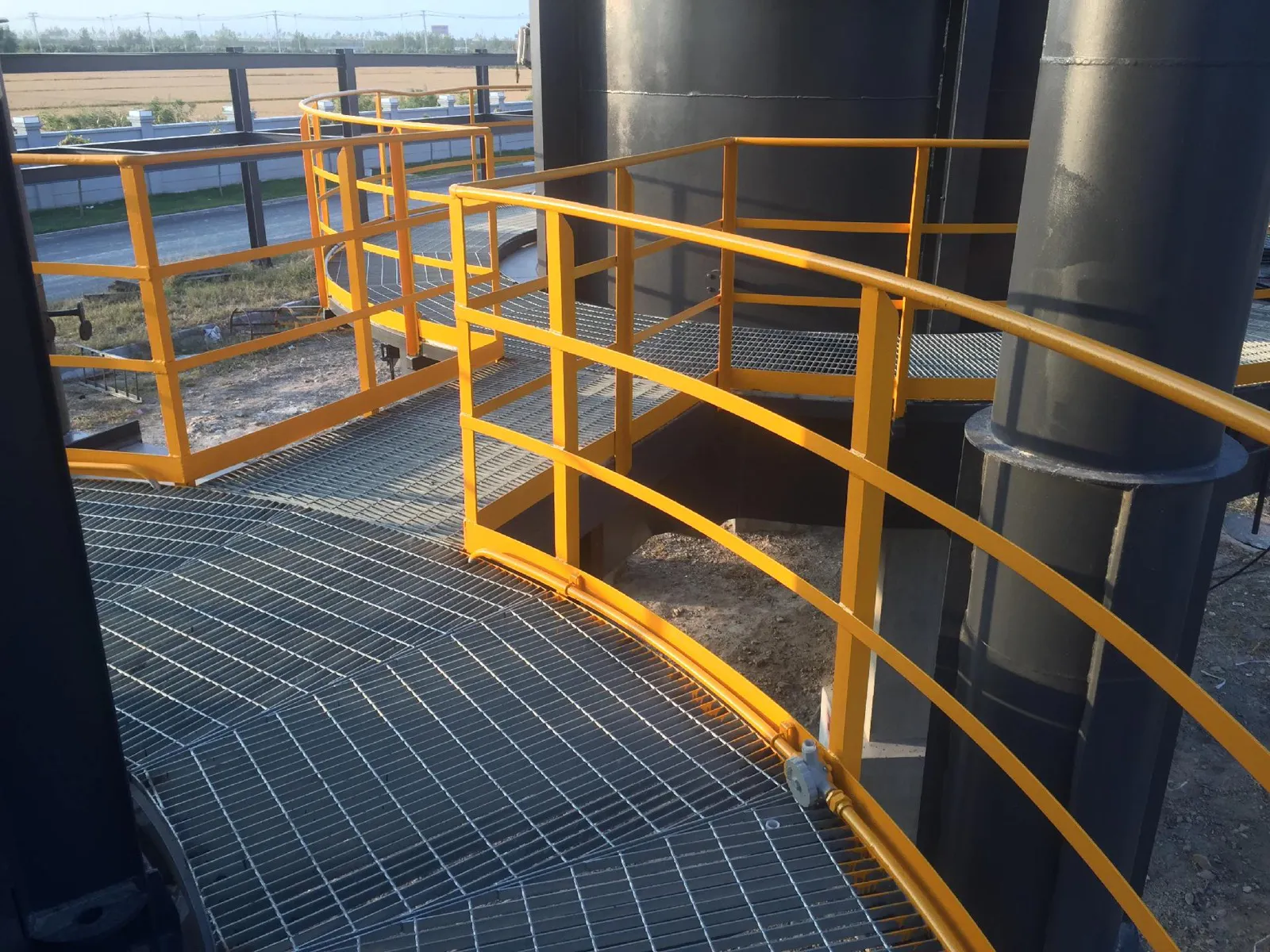
Open-grid flooring for chemical plants, equipment platforms and mezzanines — strength, drainage and ventilation in one panel.
View application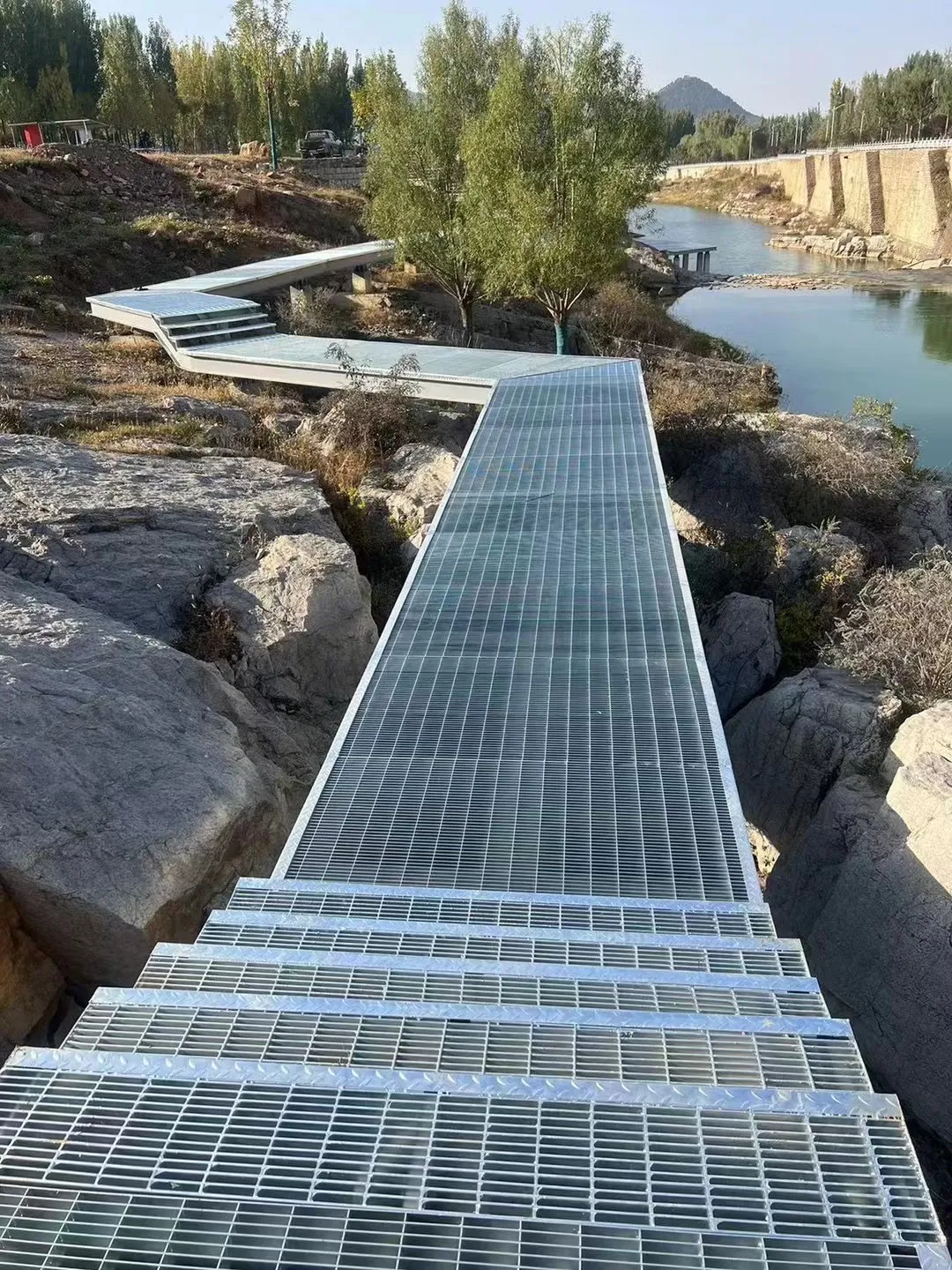
Safe, drained, ventilated walkways for photovoltaic arrays, pipe racks, tank farms and roof access routes.
View application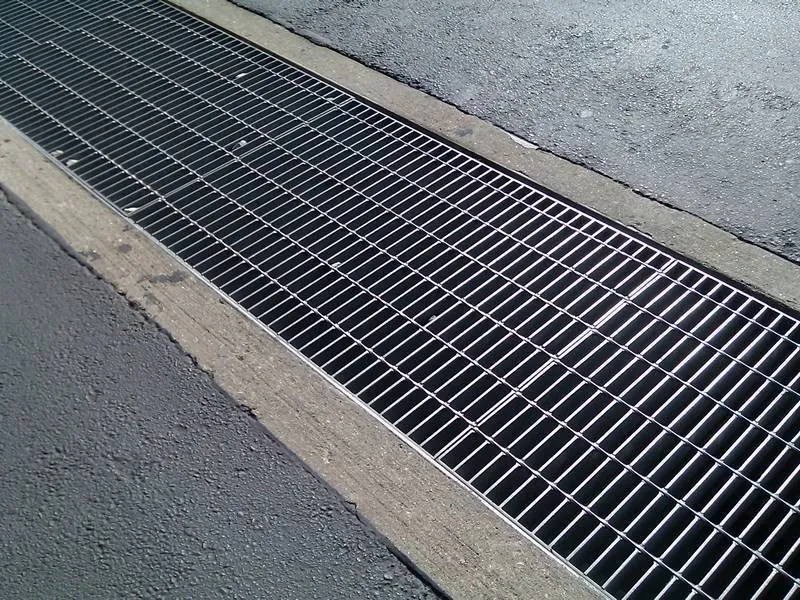
Drainage covers that keep water moving and traffic safe — from pedestrian channels to truck crossings.
View application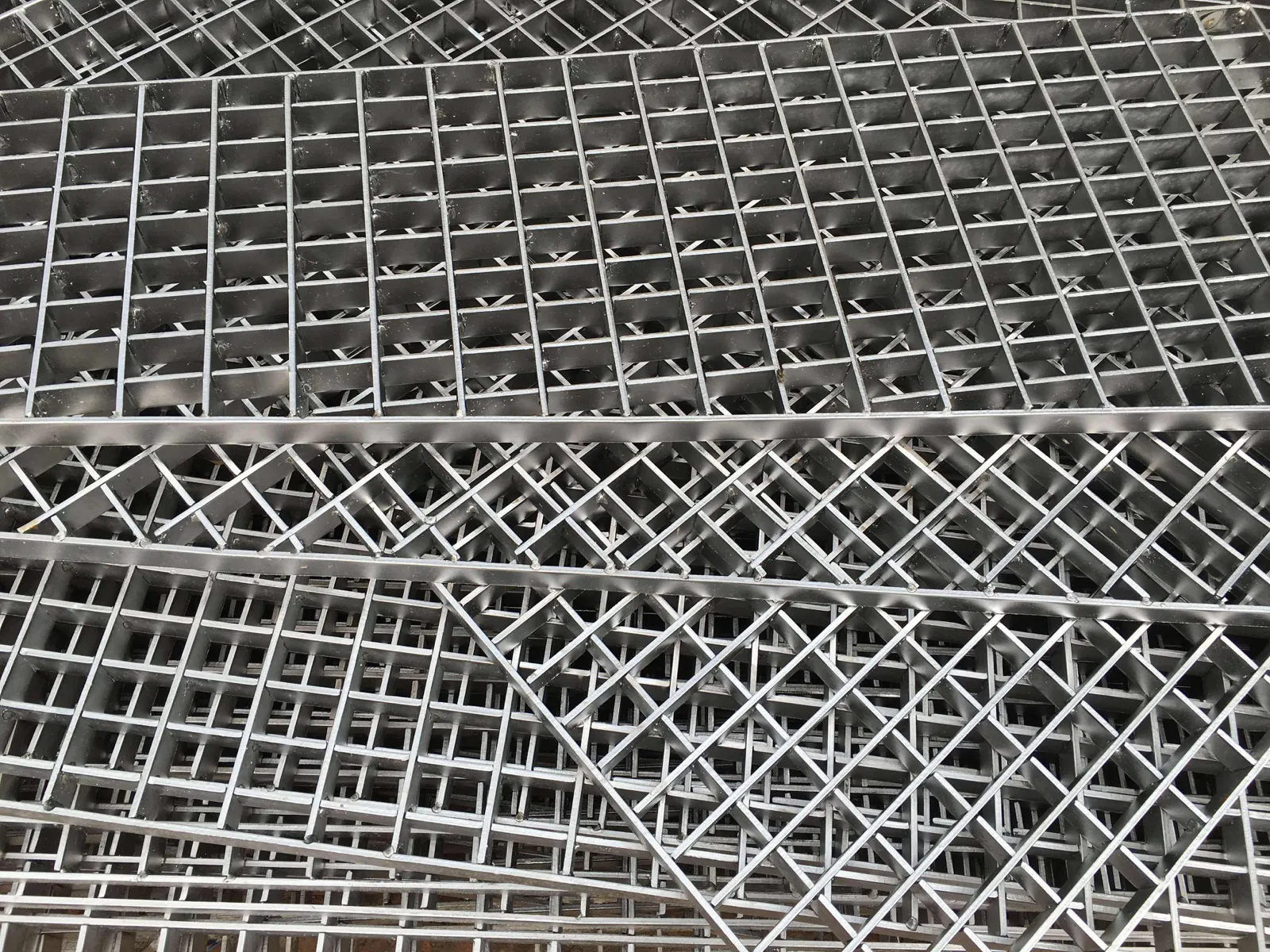
Stainless grating planned around hygienic washdown, cleaning chemistry, drainage and accessible, passivated fabrication.
View applicationFabrication & QC
Packaging
FAQ
We aim to reply within one business day during published business hours.