SS304 / 304L general-duty grating
The workhorse grade for food processing, breweries, architectural and general corrosive environments.

Engineering
Steel Grating Load Tables: How to Read and Use Them Steel Grating Sizes and Dimensions: What Each Number Means Steel Grating Standards Guide: NAAMM, ASTM, ISO and Regional CodesEngineered Around Your Load & Span
Stainless steel grating serves environments where coated carbon steel is not enough: chemical plants, food and pharmaceutical production, wastewater treatment and coastal sites. Corrosion resistance is built into the material, so welds and cut edges need no coating — supplied in SS304/304L and SS316/316L with mill, passivated, blasted or electro-polished finishes.
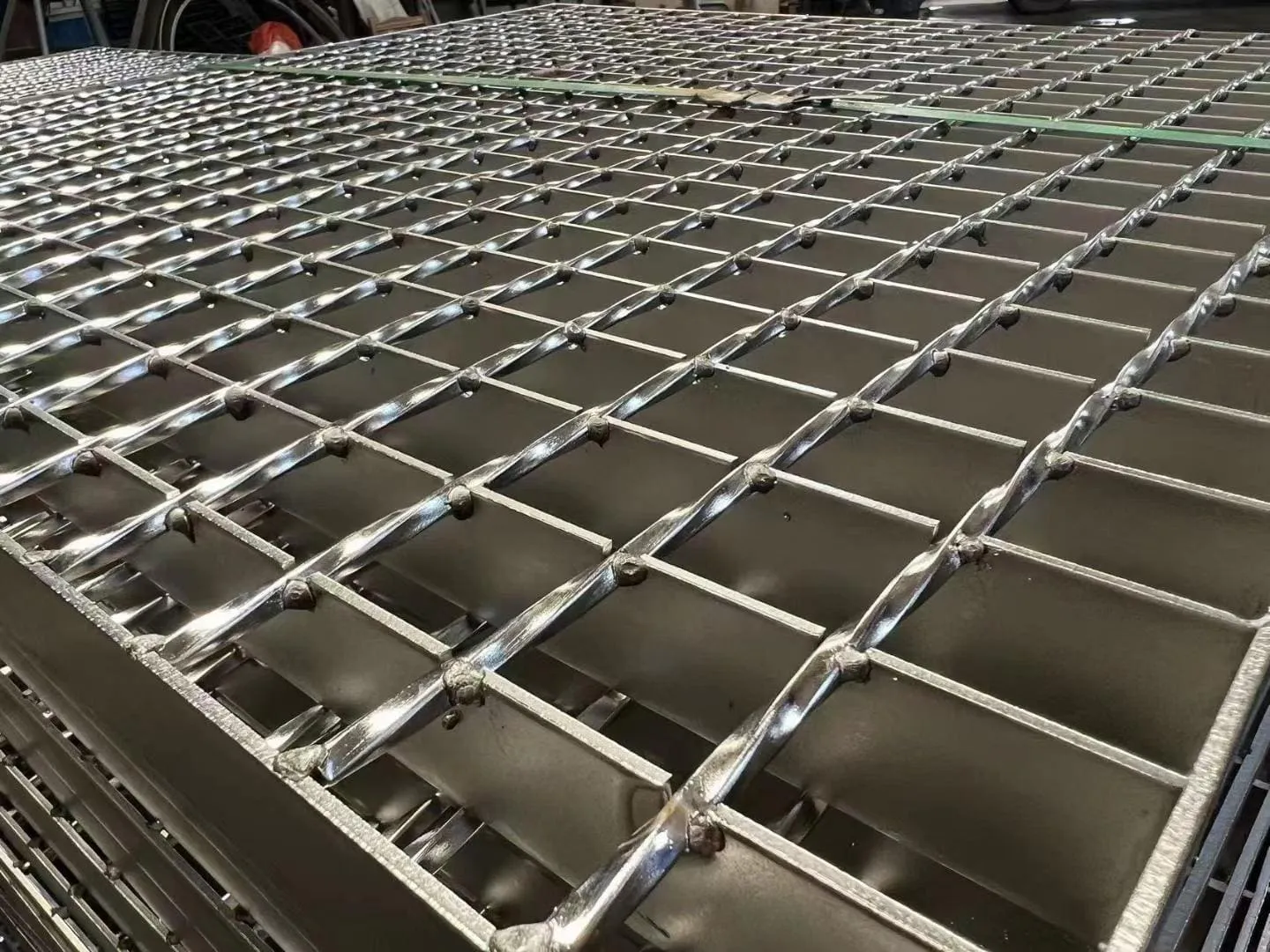
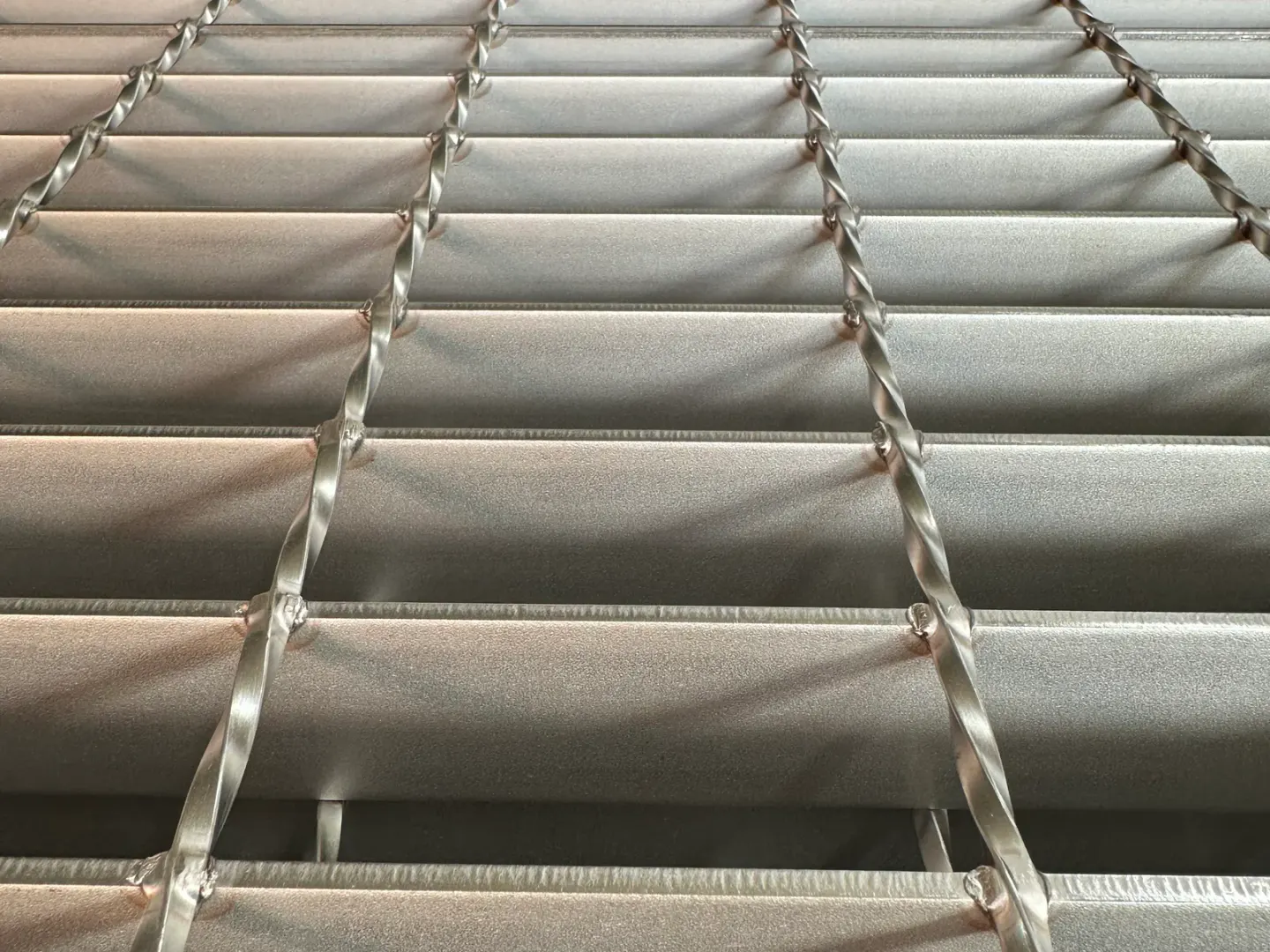
Stainless steel grating is welded bar grating made from corrosion-resistant stainless alloys. SS304 covers most food, architectural and general corrosive duties; molybdenum-bearing SS316/316L resists chlorides in marine, coastal and chemical service.
Unlike galvanized carbon steel, corrosion resistance is in the material itself, so cut edges and welds need no coating — though pickling and passivation after welding restore the full protective oxide layer, and electro-polishing adds a smooth, hygienic surface where cleanability is specified.
Grade selection follows the actual media, concentration, temperature and cleaning regime — tell us the environment and we will recommend the practical grade rather than defaulting to the most expensive option.
Gallery
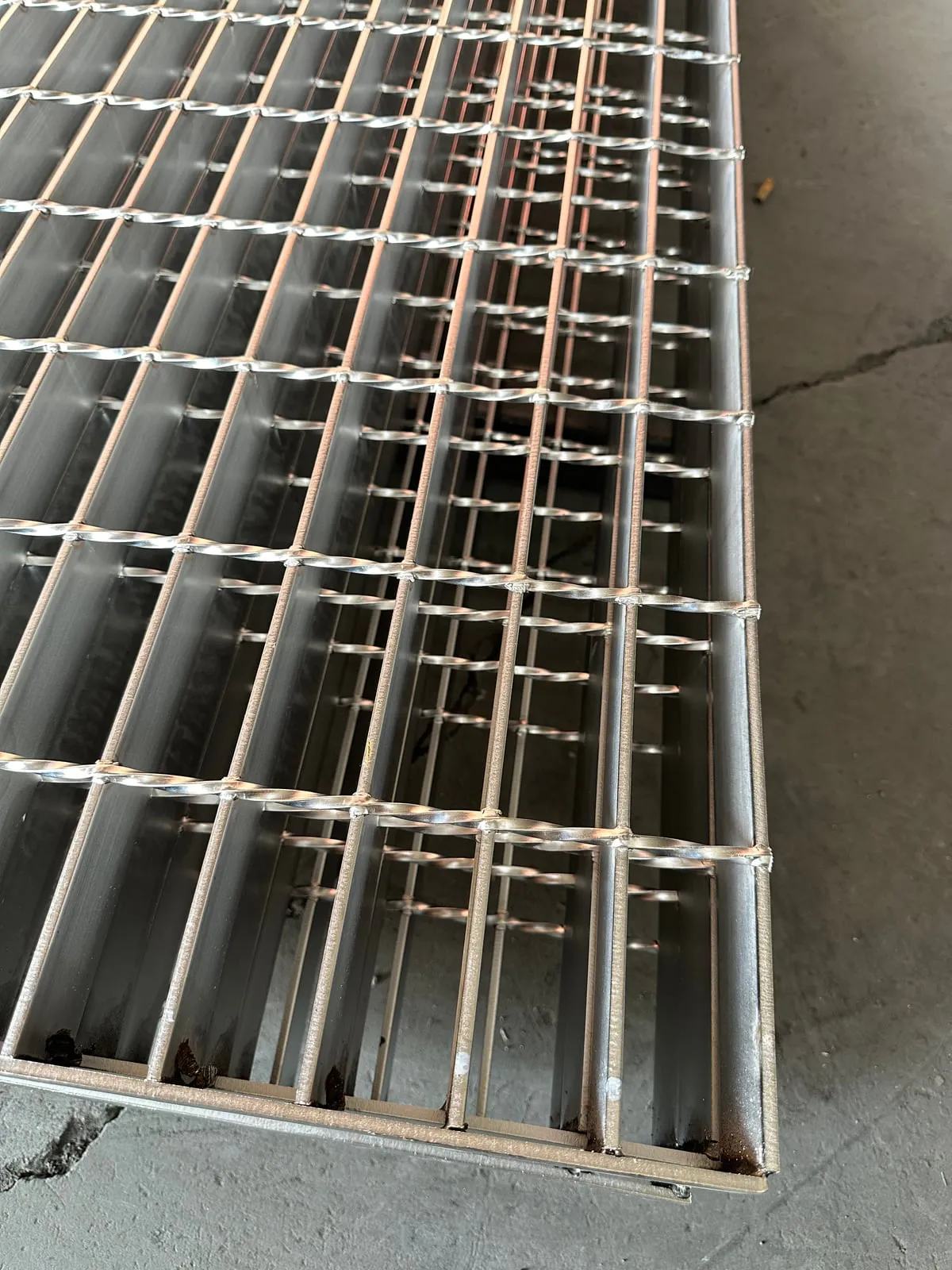
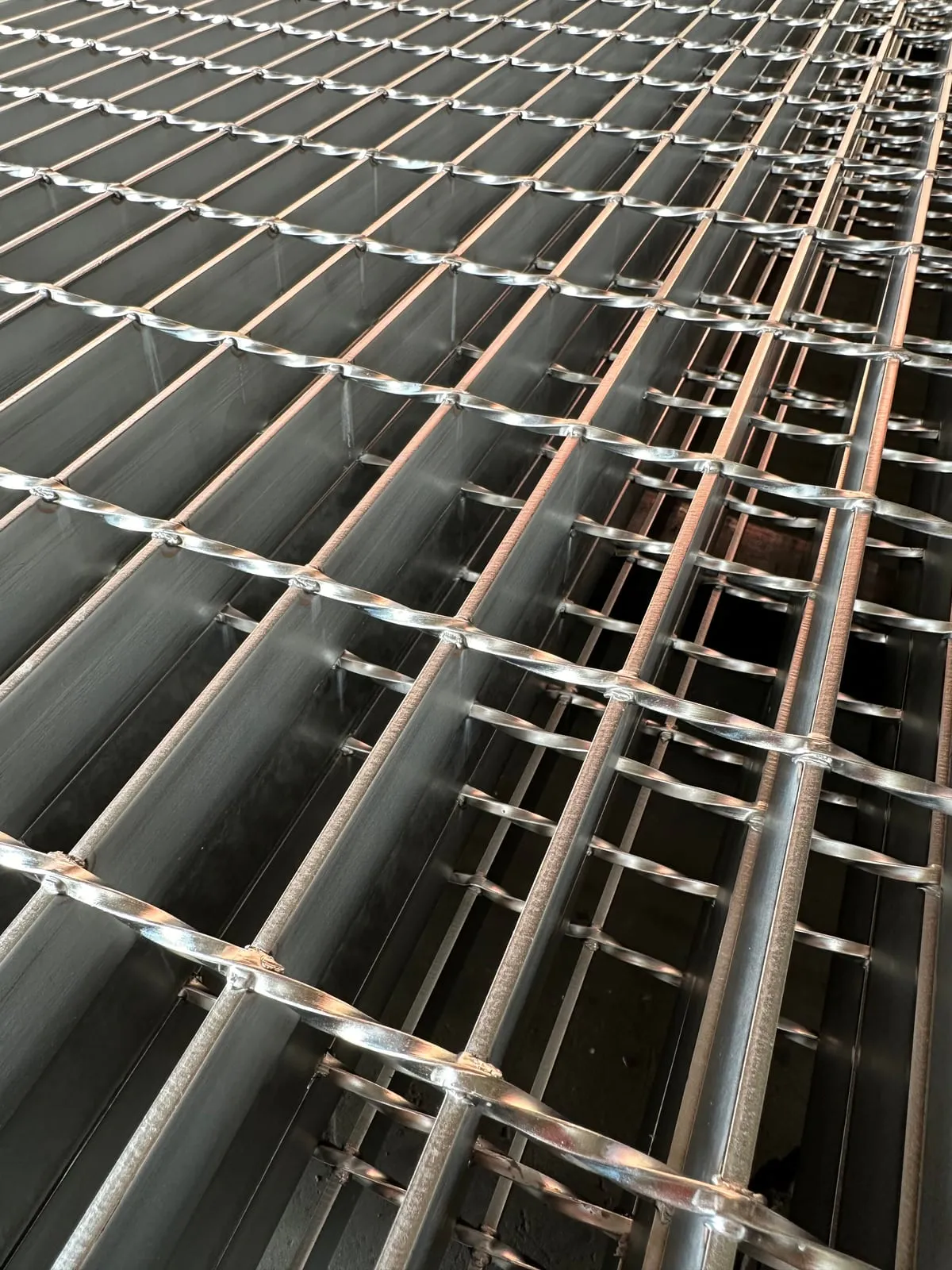
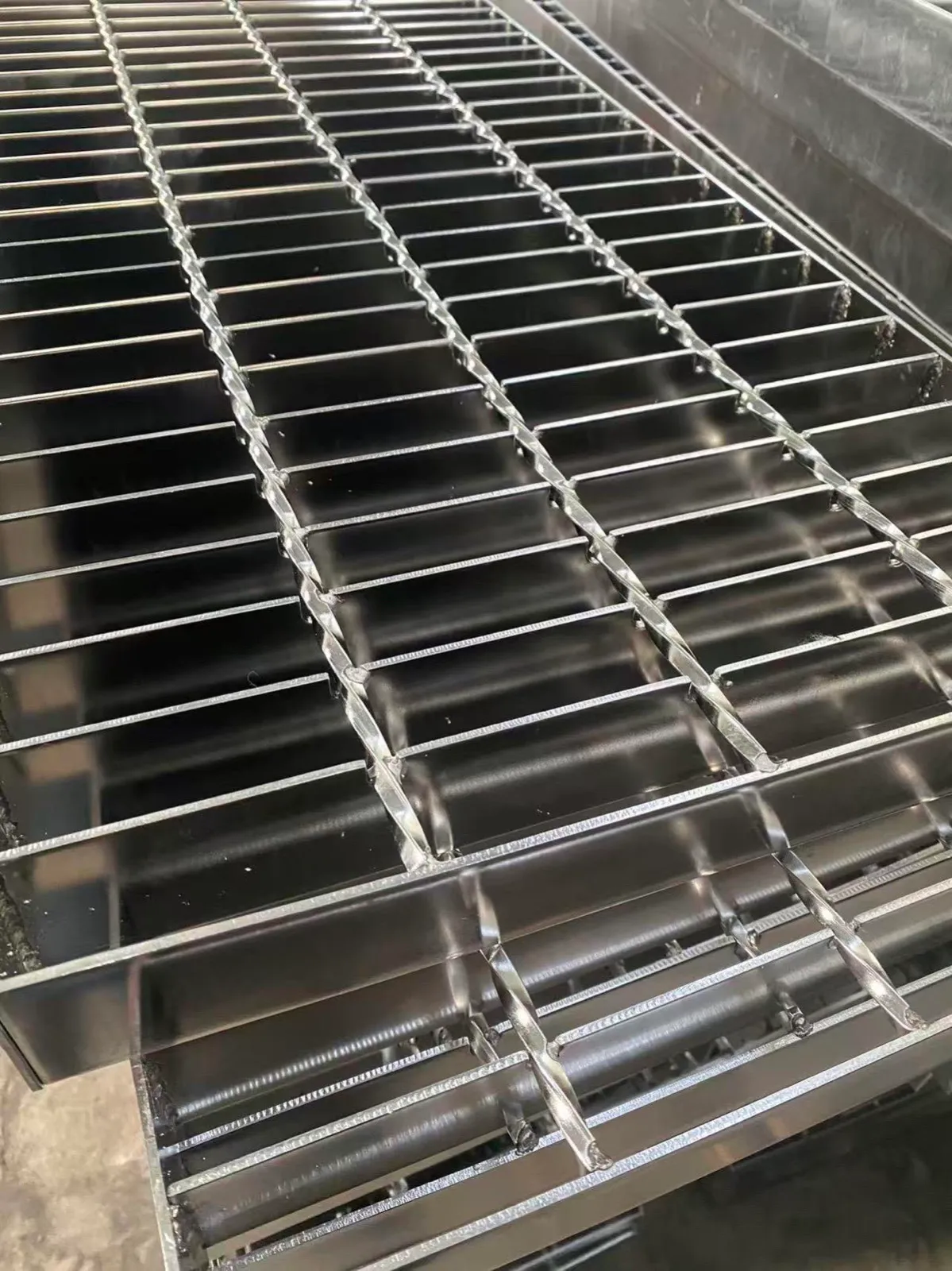
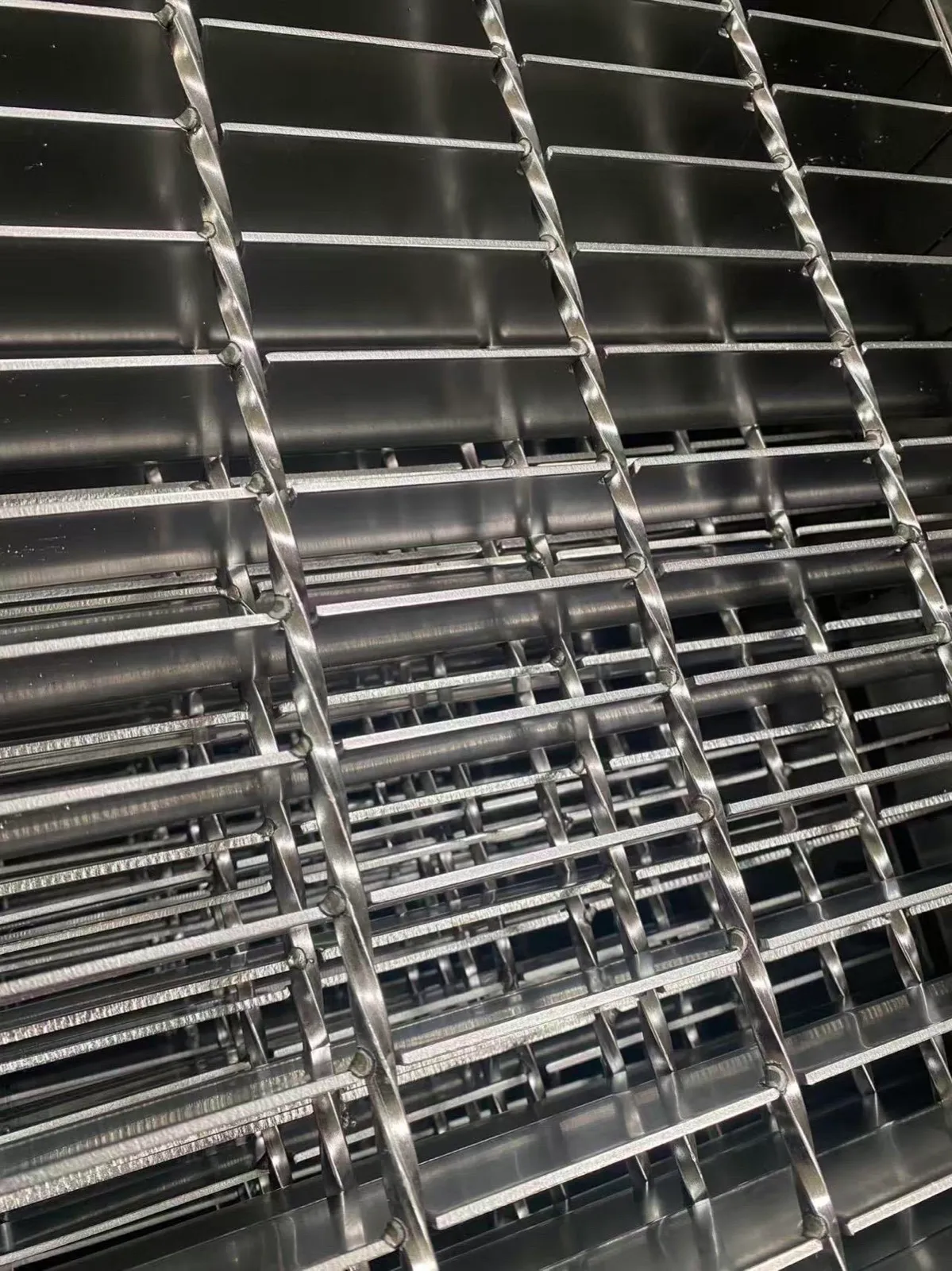
Specifications
| Item | Options | Notes |
|---|---|---|
| Grades | SS304 / SS304L / SS316 / SS316L (1.4301 / 1.4404 reference) | Supplied per project specification with MTC |
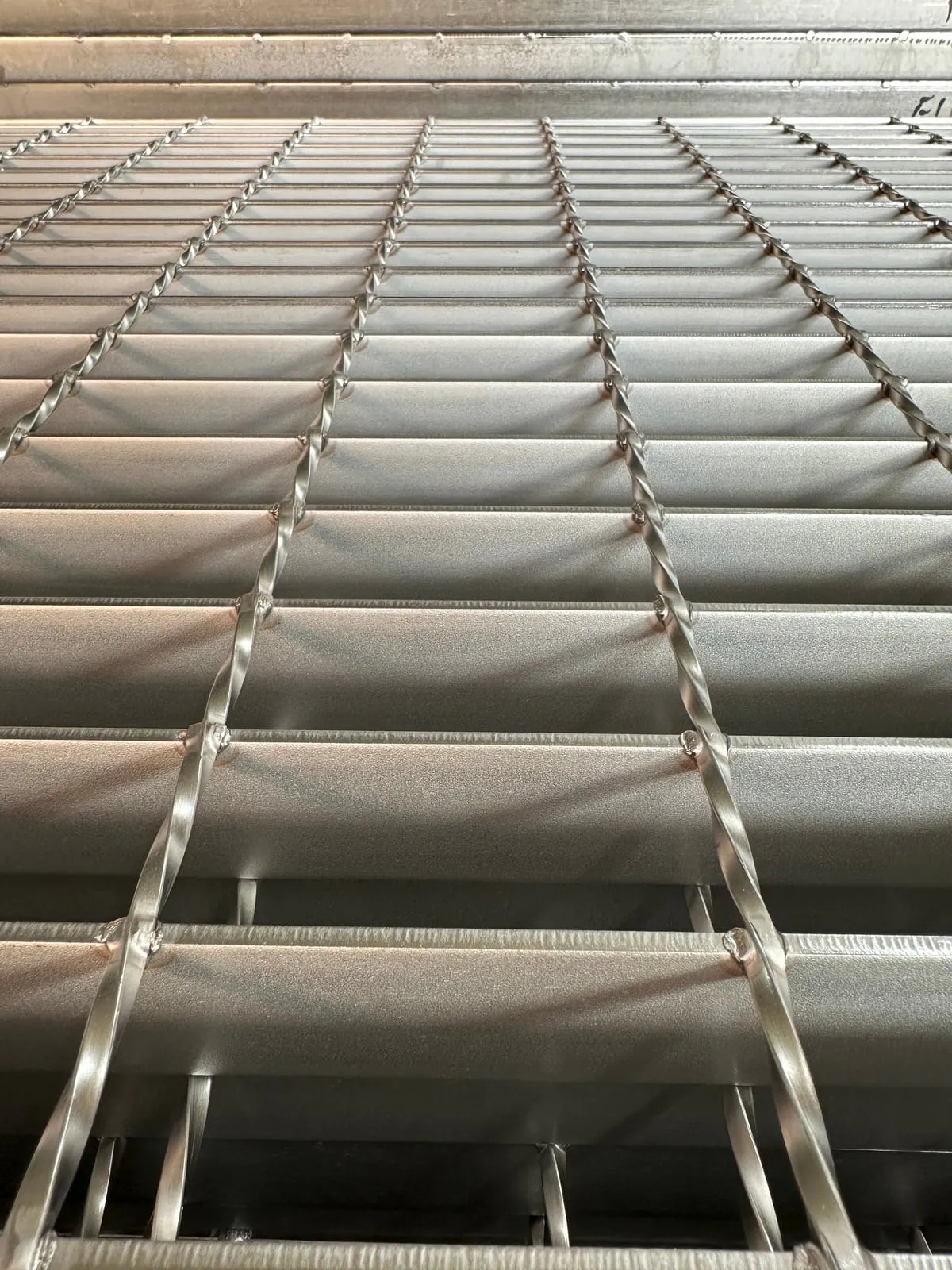
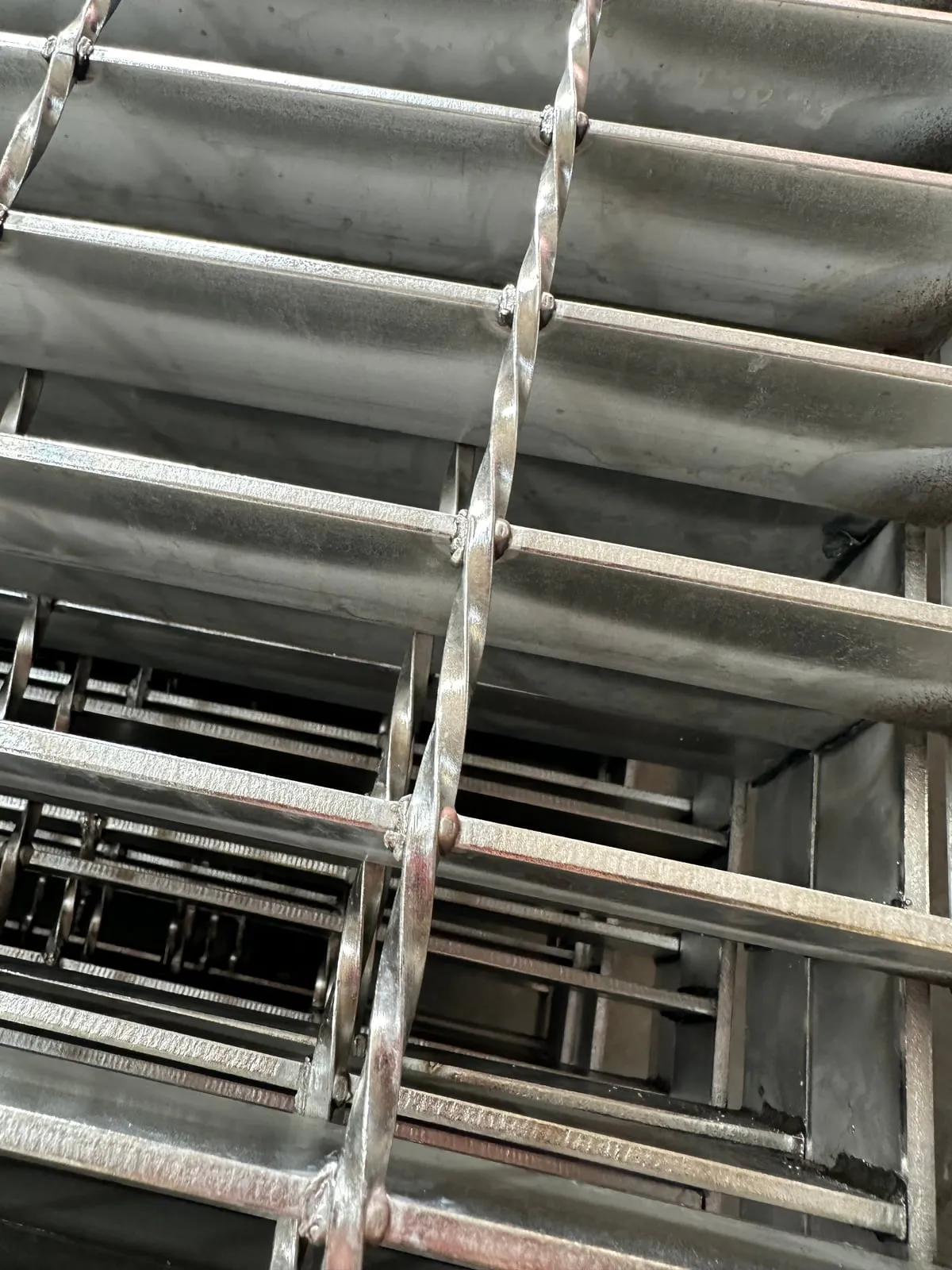
| Bearing bar size | 20 × 3 mm to 100 × 10 mm; common 25×3, 30×3, 32×5, 40×5 mm | Sized to span and load |
| Bearing bar spacing | 30 / 40 / 60 mm; imperial 19-space, 15-space series | 30 mm most common |
| Cross bar | Twisted square or round bar at 50 / 100 mm | Matched to grade and panel size |
| Surface | Plain / serrated | Serrated for wet process areas and stairs |
| Finish | Mill / pickled & passivated / bead blasted / electro-polished | Electro-polish for hygienic areas; finish agreed with samples |
| Max panel size | Up to 6100 × 1000/1200 mm | Larger areas split into numbered panels |
| Fabrication | Banding, cut-outs, toe plates, clips | Detailed from your drawings |
Variants
The workhorse grade for food processing, breweries, architectural and general corrosive environments.
Molybdenum-bearing grade for marine air, salt spray, chemical and wastewater service.
Smooth, bright surface for sanitary zones where cleanability and appearance are specified.
Toothed bearing bars for wet process floors, marine walkways and stairs needing grip plus corrosion resistance.
Applications
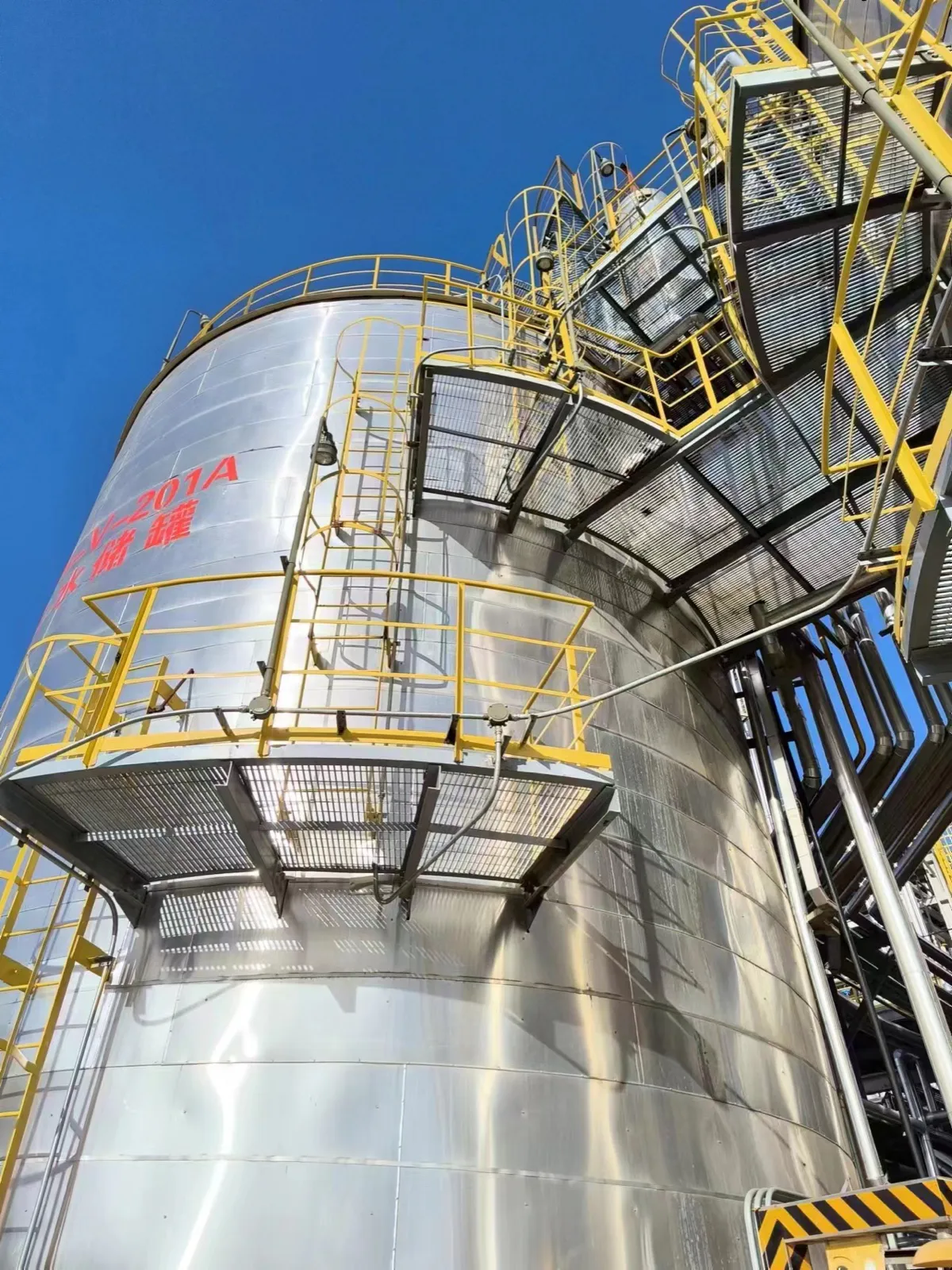
Curved and removable access panels around tanks, selected from vapour, condensate, H2S and maintenance conditions.
View application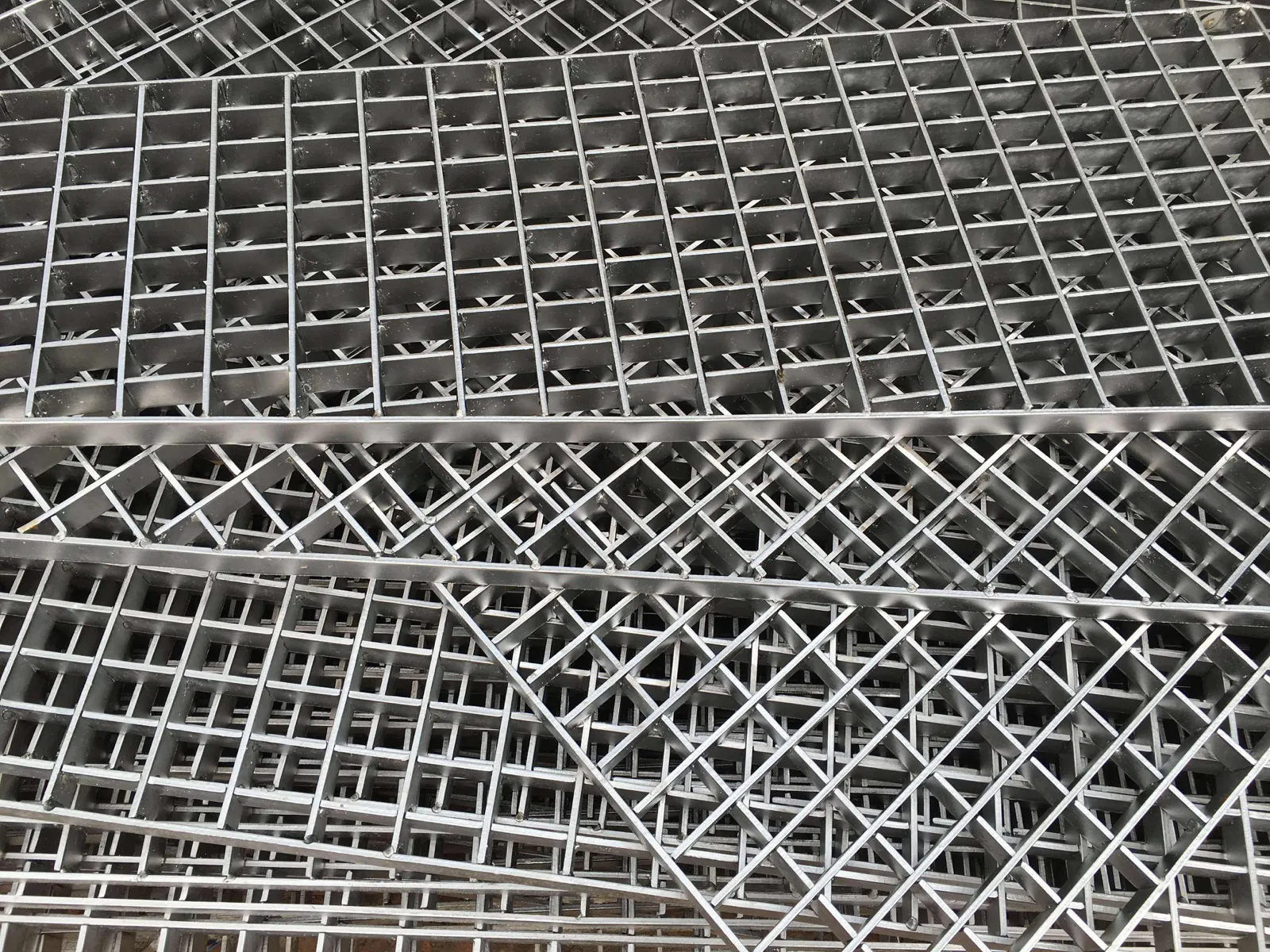
Stainless grating planned around hygienic washdown, cleaning chemistry, drainage and accessible, passivated fabrication.
View application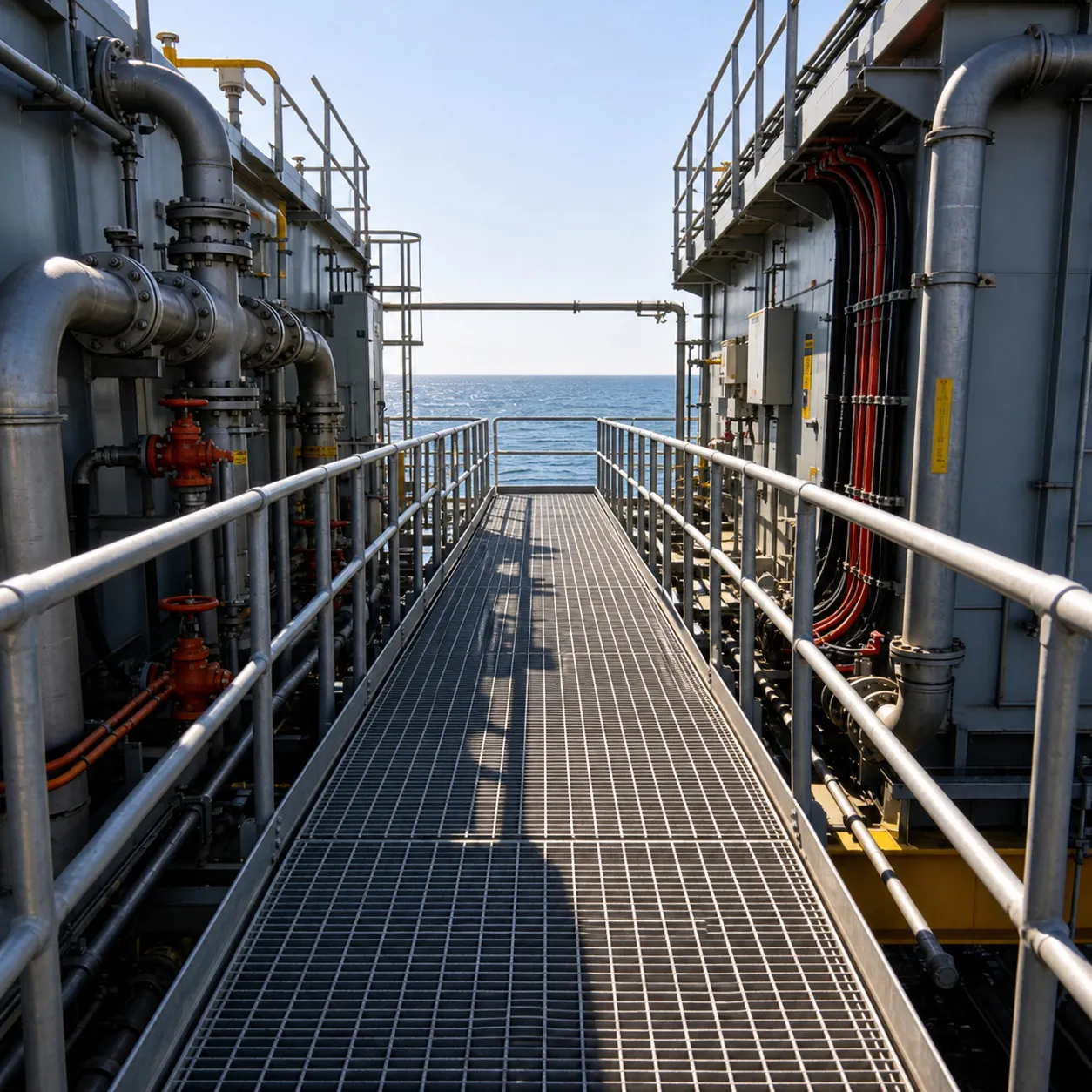
A draft selection framework for salt spray, wet-slip risk, dropped-object control and removable offshore maintenance access.
View applicationFabrication & QC
Packaging
FAQ
We aim to reply within one business day during published business hours.